Archive
Cloud Computing Transition a Pain for Your SMB? (Twitter Chat)
If transitioning to cloud computing has become overwhelming or too much of a pain, join our Twitter Chat session #SMBCloudPain on Thursday October 18, 2012, 2pm Eastern. Connect with IBM Cloud experts who can speak to your problems, concerns and pain points.
The hour-long session will include a standard Q&A period with Cloud experts covering Cloud start-up topics such as hybrid clouds, disaster recovery (DR) and transitioning your computing infrastructure to The Cloud.
You’re invited to participate in the conversation by asking questions of the panel and by giving us your thoughts and current pain points.
Please let us know if there are specific questions you’d like launched in the Twitter Chat session. We’ll be glad to post them as time allows.
If you’re involved in a Cloud Computing transition as an administrator, manager, consultant or innocent bystander, you need to connect to this Twitter Chat to find out what the implications are and how to get answers.
Cloud Computing can seem daunting for those who don’t understand how to move to The Cloud or whom to engage for help. Often, hosting companies provide IaaS or PaaS but no consulting or other assistance. The self-service Cloud might work for Enterprises or the enlightened developer but for the rest of us, we need straight answers without buzzwords, huge fees or nominal success.
This Twitter Chat is about getting those answers on security, disaster recovery, migration and costs.
Join us October 18, 2012 at 2pm Eastern on Twitter channel #SMBCloudPain for a fast-paced hour of Cloud answers and dialog.
Follow @kenhess.
IBM’s Global Cloud Initiative Hits MSPs Where It Helps
 On September 26, 2012, IBM launched a global cloud initiative focused on providing technical expertise to Managed Service Providers (MSPs)*. But, expertise isn’t the only thing IBM offers up for MSPs; it enables organizations to explore cloud computing on IBM technology, namely, IBM’s SmartCloud and PureSystems. Businesses look to MSPs for assistance in leveraging the power and the availability of cloud-based solutions. Unfortunately, many businesses aren’t taking advantage of cloud solutions due to a technical knowledge gap. IBM’s initiative enables MSPs to build their businesses by offering deep technical cloud expertise and the hardware quality to make it work.
As part of the global cloud initiative launch, IBM opened new Global Centers of Excellence for greater access to technical expertise and to better address the growing need for cloud services and support. The Centers are located in Shanghai, Tokyo, Ehningen (Germany) and in New York City.
IBM’s initiative will allow MSPs to gain hands-on experience and face-to-face interaction with cloud experts to build confidence in recommending cloud solutions to their customers. IBM cloud technology is built on open standards and enables MSPs to provide cloud-based offerings to customers more economically, more quickly and with more expertise than the closest competitor.
One of the major barriers to cloud computing adoption has been security. IBM understands, better than anyone, the requirement for security in the cloud. Healthcare facilities, law enforcement agencies, financial institutions and educational institutions are especially security conscious. IBM and its partners, such as Perimeter E-Security, assist your company and your MSP in securing communications and your data without breaking your bank account in the process.
IBM’s global cloud initiative has netted more than 1,400 MSP relationships to date. The IBM-MSP relationships enable small and medium-sized businesses access to the best available technologies and true cloud computing expertise at an affordable price in every country on the planet.
This initiative solidifies IBM’s dedication to small and medium-sized businesses and enables those businesses to compete in a global market regardless of size or physical presence. By helping the MSP, IBM is helping you to compete, to collaborate and to focus on your customers.
*A Managed Service Provider is a hosting company or an access provider that also offers IT consulting services to assist customers in network management, setting up online services, creating and managing virtual private networks, storage management, setting up telephony services and cloud computing. MSPs may act as an outsourced IT services company for business customers.
For more information:
IBM PureSystems
IBM SmartCloud
IBM Global Financing
Managed Service Provider Information
IBM Midsize Business (Video)
Perimeter E-Security

This post was written as part of the IBM for Midsize Business program, which provides midsize businesses with the tools, expertise and solutions they need to become engines of a smarter planet.
The Business Implications and Impact of Windows 8 with Ted Werth, PlumChoice CSO (Podcast)
PlumChoice Chairman, Founder and CSO, Ted Werth and I discuss the business implications and impact of the upcoming upgrade to Windows 8. What does it mean for your company? What does it mean for your legacy applications? What does it mean in terms of productivity? How long should you wait until you convert to Windows 8? Find out all the answers to your questions in this podcast.
Find out what 12 years of Windows network consulting can tell you about Windows 8, what you should expect and why you might want to wait.
Length: 17:52 min. MP3 format. Rated G for all audiences.
Ted_Werth_PlumChoice_26_Sep_2012
September 26, 2012
Symform: A Free Cloud Backup Service (Podcast)
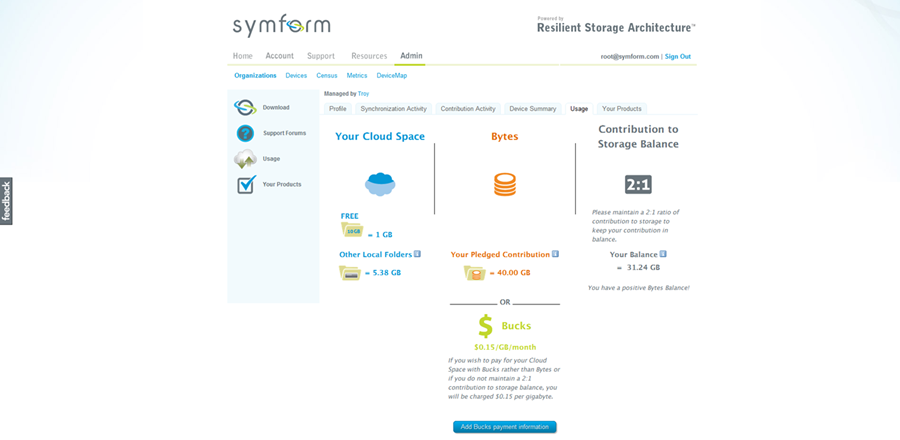 Podcast discussion with Symform CTO and co-founder Bassam Tabbara and Tim Helming, Director of Product Management. We discuss their new peer-to-peer, Cloud-based backup solution. There’s no catch. You can actually have unlimited cloud-based backup for free if you join the community and share your unused storage with the peer-to-peer cloud to create the world’s largest distributed data center. Crazy and interesting.
Symform_Free_Cloud_Backup_Podcast
Podcast: MP3 format. 28:09 minutues. Rated G for all audiences.
The Next IT Pro You Hire Might Be Virtual (Podcast)
Podcast discussion with IPSoft‘s Chief Commercial Officer, Jonathan Crane about Artificial Intelligence, Expert Systems and Virtual Engineers. IPSoft has developed a Virtual Engineer that can save you significant money over “live” Engineers. Near the end of the podcast, Jonathan gives you some real numbers on savings that current customers are reporting. Listen to learn more about Artificial Intelligence, Expert Systems and IPSoft’s Virtual Engineer.
Jonathan_Crane_IPSoft_AI_Expert_Systems
Podcast: MP3 format. 28:42 minutes. Rated G for all audiences.
Integrated Systems and Virtualization for Midsize Businesses (Tweet Chat Recap)
On August 20th from 2pm – 3pm ET the @IBMPureSystems handle hosted a Twitter Chat around the question of “Integrated Systems & Virtualization for Midsize Businesses”. Listed below are our expert panelist answers, as well as top answers from others in the community. After each question, there is a synopsis of the answers and further analysis. Comments have been sprinkled throughout the post to guide the reader and help establish a flow to what is a free-flowing twitter conversation.
The five questions asked during the Tweet Chat were as follows and my answers (I didn’t attend the Tweet Chat):
Q1: What ROI benefits does @IBMPureSystems deliver beyond more computing power?
Q2: Aren’t expert integrated systems too complex for midsize businesses to implement?
Q3: What common concerns do midsize businesses have when considering virtualization?
Q4: How can virtualization help with the cost and complexity of infrastructure management?
Q5: What are some essential requirements for simplifying a data center at a midsize biz?
Q6: #IBM says @IBMPureSystems is designed ‘with cloud in mind.’ What exactly does that mean?
A1: Efficiency improvements in deployment and management–two huge pain points for the #SMB market. The return on those two areas alone is worth the cost of the initial investment.
A2: Not at all too complex. It sounds complex but IBM makes it easy to implement and offers assistance where required. The increased efficiency negates any perceived complexity.
A3: I would say cost. Business owners and execs see dollars flying out the window with any technology shift. What they must understand is that there is an investment in any technology but it’s the return on that investment that really matters. Don’t look for the short term return. The real return on virtualization is realized longer term through fewer technology refreshes, lower staffing requirements and more efficient operations.
A4: I think I partly answered this one in Q3. However, virtualization brings all of the complexities of a standard network into a single location and makes them simpler. It also increases efficiency, and lowering costs, by leveraging skills. For example, System Administrators can now fully provision and deploy systems without help from a Network group, Storage group or Facilities staff.
A5: Consolidation would be number one. Consolidation decreases the number of physical systems to worry about, maintain and refresh. The second would be virtualization. Virtualization simplifies the server environment as discussed previously.
A6: It’s built with elasticity and workload optimization as part of its feature set, which is part of the definition of cloud solutions. Cloud solutions are elastic in nature and are workload optimized. This means that you can quickly deploy and undeploy computing resources as needed and you’ll know that you won’t have performance bottlenecks regardless of workload type or magnitude.
This post was written as part of the IBM for Midsize Business program, which provides midsize businesses with the tools, expertise and solutions they need to become engines of a smarter planet.
JouleX and Saving Money in Your Data Center. The Heat is On. (Podcast)
JouleX Vice President of Sales and Marketing, Tim McCormick, and I discuss how to save significant money in your data center by knowing where your energy is going. You might be surprised at the numbers and how much you can save. It’s shocking to know how much money and energy are being needlessly wasted. And, we’re not talking “green” anything, except money. Give special attention near the end of the podcast when Tim tells you the scale of the savings that current customers see in their data centers. IBM is a JouleX Strategic Partner.
JouleX_TimMcCormick_24_Aug_2012
Length: 26:26. MP3 format. Rated G for all audiences.
This post was written as part of the IBM for Midsize Business program, which provides midsize businesses with the tools, expertise and solutions they need to become engines of a smarter planet.
Adobe Edge Preview 5 (Book Review)
 Adobe Edge Preview 5
The Missing Manual
by Chris Grover
© O’Reilly Media, Inc. 2012
$24.99 Retail, $16.57 Amazon, Kindle Edition $11.99.
Adobe’s software products are like Apache helicopters: Extremely effective and the very best at what they do but very complicated to operate at maximum efficiency.
O’Reilly’s Missing Manual series fills in the blanks and gets you up and running quickly with tips and tutorials to perform the most popular functions with the software. Though this book was recently released (May 16, 2012), Adobe Edge Preview 6.1 is now the current version. However, if you aren’t one of those leading edge (No pun intended) types, then you likely still own Preview 5.
This Missing Manual is an essential desk reference, if you spend any time at all with Preview. The Internet, for all its positives and negatives, is a visual place. Adobe Edge Preview helps you create a more enjoyable visual experience for those who visit your website. The Missing Manual helps you do so painlessly.
After a short introduction to Adobe Edge, Grover dives right into your first animation project. From personal experience, web animation is not an easy thing to do–no matter how good the instructor or the instruction is but Grover certainly makes it seem less difficult and less tedious than it is.
Other techniques outlined in the book are: Learning Timelines, Transitions, HTML5, CSS, JavaScript, jQuery and JavaScript tricks and techniques for advanced website effects.
Chris Grover manages to pack quite a bit into less than 200 pages. Overall, I like the book, its progression and its abundant graphics and screenshots. I think this book will get you started but for more advanced techniques or in-depth professional Edge work, you’re going to need a bigger book.
If you’re on the fence about buying this book, I’d suggest going with the Kindle version or searching for a used paperback copy. The book isn’t bad but it’s a new book that covers only the basics and you might find yourself wanting more but not getting it here. Buying the paperback version gets you the free ebook version and periodic updates.
Review: 8/10
Recommendation: High
Interview with Boxtone’s CMO Brian Reed (podcast)
Interview with Boxtone’s CMO/CPO, Brian Reed. Boxtone is a Mobile Device/Application/Support/Operations Management company that has a new way of managing devices from the Cloud.
Boxtone_Brian_Reed_16_Aug_2012_12_01_54
MP3 format. 28:32. Rated G for all audiences.
SSH Key Management for Businesses
 SSH is one of the most widely used protocols for connecting to and from UNIX and Linux systems. SSH, or Secure Shell, was developed to replace the plain text Telnet protocol with encrypted communications between clients and host systems. You probably are familiar with the free Windows PuTTY client software that performs SSH and other types of connectivity between Windows and UNIX or Linux systems.
SSH communicates over a secure connection and uses encrypted traffic between the client and server. That’s good but how does SSH authenticate a legitimate client against a server without sending unencrypted passwords over a connection? SSH uses keys. Using SSH keys, you can authenticate your client to a server without sending a password. This method reduces the threat of brute force password attacks to near nil. The reason is that it’s next to impossible to guess the correct credentials, while passwords, no matter how complex, are still sometimes guessable.
Keys are especially useful in situations where system administrators desire to use secure communications for automating tasks between remote systems.
Features of the SSH Protocol
- Strong encryption
- Strong authentication
- Communication integrity
- Tunneling and Forwarding
- Authorization
Keys also help identify servers to clients. For example, when you connect to a remote system for the first time, a key is stored in your personal key store. That remote system key is checked each time you connect to the remote host. If the host’s key changes or if someone is attempting to hijack your session, you’ll receive a notification that the host’s key has changed, warning you to go ahead if you trust the new connection information or to disconnect safely.
One of SSH’s best features is the ability to tunnel insecure protocols over its secure communications. Tunneling occurs when you setup a secure link between systems using SSH and a local port forwarded to a remote system’s insecure port. This allows you to encrypt traffic to a remote email server from your local system so that all traffic between the two is encrypted. For example, you can setup ssh to “listen,” on say, local port 2000, to communications with some remote system on the insecure port, 25 (Sendmail).
Business Drivers
SSH Keys seem like a no lose prospect for administrators. However, there’s no perfect situation or protocol. Keys must be managed. Users leave companies sometimes on less than desirable terms, systems go through changes and best security practices require that keys be refreshed. Most organizations either don’t handle key management at all or handle it on an ad hoc basis and in a manual way. For organizations of any size, such relaxed management is not only a security risk, it also violates some regulatory standards.
The answer is to manage those keys using a software suite that provides insight into your environment, helps you stay safe and compliant, and does so at a reduced cost compared to labor-intensive manual management.
Key Management
Key management basically answers the question, “Who has access and to what do they have access?” This is not an easy question to answer without a centralized management suite. In fact, if your organization doesn’t have any key management in place, ask the question, “Who has access and to what do they have access?” And, remind the person or persons whom you’re asking that active user accounts do not correlate with actual access.
In most environments, no one has the time nor takes the time for key management. Key management has become an afterthought. That is, until there’s a security breach or security compliance audit.
A key management suite shows you all relationships between systems and user accounts. You can see, graphically, who has access and to what they have access. Key management isn’t to be taken lightly. While it’s almost impossible to spoof a connection or masquerade as a legitimate system, it is possible through the use of stolen keys, to break into systems meant for simple automation or passwordless logins.
This does not imply that either of those scenarios is a security flaw or SSH flaw but a vulnerability that can be mitigated through the use of a good key management suite. A simple demonstration will convince you that you need to implement a key management program in your organization.
This post was written as part of the IBM for Midsize Business program, which provides midsize businesses with the tools, expertise and solutions they need to become engines of a smarter planet.

 Techopedia
- An error has occurred; the feed is probably down. Try again later.
Datamation
- Minimus Appoints Tech Dealmaker Yael Nardi as Chief Business Officer to Drive Hyper-Growth
- USA₮ Modernizes American Payments with High-Impact St. Patrick’s Day Activation in Times Square
- Google and NextEra Strike AI-Powered Grid Deal
- NYT Sues Perplexity AI in Copyright Conflict
- Cloudflare Outage Affects Major Websites
- OpenAI Forces AI to Confess Its Lies
- OpenAI Declares Code Red as Google’s Gemini 3 Threatens ChatGPT
- Coupang Breach Exposes 33.7M South Koreans’ Data
- ChatGPT Celebrates Third Anniversary
- Asahi Group Reveals Findings of Cyberattack

 The Frugal Networker
You must be logged in to post a comment.