Archive
Infrastructure Matters: Cloud Infrastructure Socialcast
 This post is based on the Infrastructure Matters Socialcast panel discussion that focused on midsize business cloud infrastructure. The panel included in this Socialcast is host Paul Gillin, Scott Hawkins, Cal Braunstein, and John Alday. The Infrastructure Matters Socialcast is a one-hour video discussion about key topics facing midsize businesses concerning IT infrastructure, infrastructure outsourcing, cloud solution costs, and the changing nature of information technology.
About The PanelistsPaul Gillin – A veteran technology journalist and a thought leader in new media. Since 2005, he has advised marketers and business executives on strategies to optimize their use of social media and online channels to reach buyers cost-effectively.Cal Braunstein – Chairman/CEO and Executive Director of Research at Robert Frances Group, Inc. (RFG). RFG provides concierge advisory, consulting, and research services to business technology executives as well as to marketing/sales management for companies that provide IT communications services and products.Scott Hawkins – IBM’s Program Director of X86 and Pure Systems Solutions organization.John Alday – CEO of Cima Solutions Group (CSG). CSG delivers reliable and efficient IT solutions that create financial value for their clients. CSG offers its clients technology solutions from manufacturers such as IBM, VMware, Google, FalconStor, Compellent, Scale, and others.

This post was written as part of the IBM for Midsize Business program, which provides midsize businesses with the tools, expertise and solutions they need to become engines of a smarter planet.
I’ve been compensated to contribute to this program, but the opinions expressed in this post are my own and don’t necessarily represent IBM’s positions, strategies or opinions.
Staying Secure in the Cloud: Four Tips for Midsized Businesses
 Working in the cloud can be risky business but it doesn’t have to be a show stopper. What you have to understand is that there’s risk with anything you do and the cloud is no different. You have to manage your risk with intelligent security measures and accept a certain amount of risk that comes with doing any kind of business online. Risk is part of doing business–in the cloud or not.
“IBM is an industry leader in IT security. IBM and IBM Business Partners offer a complete package to fit the needs of midmarket organizations. From cloud computing and big data management to mobile technology and social networking, IBM security offerings allow midsize companies to assess, plan, deploy, and use effective security solutions for their businesses.According to analysts, no other company has the depth and breadth of IBM’s knowledge and experience for security solutions. Few service providers offer end-to-end identity and access management solutions that can address various requirements with a complete set of solution elements that encompass hardware, software, design and implementation, and management services.”
As someone who needs to protect your midsize business, security is important but often elusive and “black box-like.” Your business needs to find new ways to provide security for data, mobile, and cloud computing environments. For more information on how to acquire the industry’s best and most acclaimed security solutions, connect to: http://ibm.com/midmarket/us/en/it-security.html and download the IBM X-Force 2012 Trend and Risk report.
This post was written as part of the IBM for Midsize Business program, which provides midsize businesses with the tools, expertise and solutions they need to become engines of a smarter planet.
I’ve been compensated to contribute to this program, but the opinions expressed in this post are my own and don’t necessarily represent IBM’s positions, strategies or opinions.
IBM Introduces X6 Architecture, Optimizes x86-Based Servers For Cloud, Analytics
 IBM Introduces X6 Architecture, Optimizes x86-Based Servers For Cloud, Analytics
Industry-first integrated flash storage for high performance, modular design for long life cycles to help reduce costs, improves resiliency for increased uptime
New IBM FlashSystem 840 doubles performance, ideal for virtualization and cloud
Armonk, N.Y. – 16 Jan 2014: IBM (NYSE: IBM) today announced the sixth generation of its enterprise X-Architecture for System x and PureSystems servers, providing industry-leading improvements in the performance and economics of x86-based systems for analytics and cloud.
“Our enterprise X-Architecture for x86-based servers and solutions delivers high performance and the highest customer satisfaction in the industry, making us number one in high-end x86 systems,” said Adalio Sanchez, general manager for IBM System x and PureFlex. “We continue to innovate and deliver leadership performance, reliability and investment protection for mission-critical workloads with X6.”
Clients are rapidly adopting analytics for greater business insight and moving critical workloads like ERP, analytics and database to the cloud for increased efficiency and lower costs, and x86-based systems are the first choice for many. The X6 architecture represents IBM’s continuing R&D investment and industry leadership in x86-based systems, and is specifically designed to provide new levels of performance and resiliency for enterprise applications. For memory-hungry applications, X6 delivers three times the scalable memory of current competitors’ and IBM x86-based systems to support cloud and analytics.*
The X6 architecture is:
- Fast, with integrated eXFlash memory-channel storage–an industry first, this DIMM-based storage provides up to 12.8 terabytes of ultrafast flash storage close to the processor, increasing application performance by providing the lowest system write latency available, essential for analytics applications. X6 can provide significantly lower latency for database operations, which can lower licensing costs and reduce storage costs by reducing or eliminating the need for external SAN/NAS storage units;**
- Agile, with a modular, scalable design that supports multiple generations of CPUs–another industry first–and can reduce acquisition costs, up to 28 percent in comparison to one competitive offering.*** X6 provides stability and flexibility through forthcoming technology developments, allowing users to scale up now and upgrade efficiently in the future. Fast set-up and configuration patterns simplify deployment and life-cycle management;
- Resilient, with features that can help extend cloud delivery models to mission-critical applications. Memory and storage increase virtual machine capacity to allow SaaS delivery of applications. Autonomous self-healing CPU and memory systems maximize application uptime by proactively identifying potential failures and taking action to correct them. In addition, Upward Integration Modules can help reduce the cost and complexity of system administration by allowing operators to perform management tasks through virtualization tools.
Server models supported by this new architecture currently include the System x3850 X6 four-socket system, System x3950 X6 eight-socket system, and the IBM Flex System x880 scalable compute nodes. IBM also is introducing the System x3650 M4 BD storage server, a two-socket rack server supporting up to 14 drives delivering up to 56 terabytes of high-density storage — the largest available in the industry. It provides 46 percent greater performance than previous comparable IBM System x servers and is ideally suited for distributed scale-out of big data workloads.****
New Solutions for X6
Clients moving enterprise applications to cloud models and adopting analytics for quick business insights require integrated solutions for fast deployment, efficiency and performance. To help clients achieve these results, IBM is announcing new solutions for its X6 architecture for analytics, database and cloud deployment, including IBM System x Solution for DB2 with BLU Acceleration on X6 for accelerating analytics, IBM System x Solution for SAP HANA on X6 for analytics, and System x Solution for VMware vCloud Suite on X6 for infrastructure-as-a-service capabilities.
New Storage for cloud, analytics
IBM has announced the general availability of the new IBM FlashSystem 840. The new system provides nearly double the bandwidth and double the performance — 1.1M IOPS — of its predecessor, the FlashSystem 820 — making it ideally suited for analytical databases, virtualization infrastructures, and public and private clouds.***** Supporting up to 48 terabytes of usable capacity in a 2U unit, the all-Flash array also features IBM MicroLatency technology that significantly speeds data access times from milliseconds to microseconds (less than 135 microseconds) giving organizations faster actionable insights from real-time data analytics. In addition, a new management GUI, as well as datacenter-optimized features such as hot-swap components and concurrent code load, enable fast installation and easy management.
IBM also is introducing the FlashSystem Enterprise Performance Solution, which bundles the FlashSystem 840 and IBM System Storage SAN Volume Controller (SVC) technology. The solution includes a suite of advanced data management features ranging from Real-time Compression, snapshots, thin provisioning, VAAI, and application aware copies, to FlashCopy, and storage virtualization with IBM Easy Tier.
New SDE capabilities for cloud
IBM is strengthening its software defined environment (SDE) portfolio with the introduction of IBM Platform Resource Scheduler for private and hybrid IBM SmartCloud clients who want to accelerate time-to-results, improve infrastructure flexibility and reduce operating costs. IBM Platform Resource Scheduler provides a fully virtualized, open and programmable architecture that ensures enterprises are taking advantage of all available IT resources — from application software licenses to available network bandwidth.
Integrated with OpenStack, this dynamic resource management tool provides a comprehensive set of intelligent, policy-driven scheduling features that automatically allocate the right resources to the right job, balances workload demand with infrastructure supply and ensures adherence to service level agreements, improving overall application performance and efficiency. The open and extensible architecture also allows enterprises to easily reconfigure and add customized policies to meet their specific sharing and scheduling needs.
Financing for cloud and analytics
IBM Global Financing has announced new financing offerings today to help clients quickly adopt new cloud and analytics solutions by helping reduce upfront costs and speed return on investment. Credit-qualified clients can obtain Fair Market Value leasing when acquiring X6 architecture solutions. Other offerings announced include 0-percent financing and deferred payments for 90 days when they acquire IBM PureSystems, SDE and Storage technology.
Also, IBM’s new mobile financing application can help IBM Business Partners close more business with their clients, allowing credit-qualified clients to acquire financing to deploy solutions for analytics, mobile computing, social business and Smarter Planet technologies quickly.
IBM Systems and Technology Group offers a full range of offerings supporting public, private and hybrid cloud implementations that integrate with IBM’s cloud software and services. This Systems portfolio includes IBM System x racks and BladeCenter, NeXtScale, PureFlex, Power Systems and System z servers, and IBM Storage solutions. For more information on IBM Global Financing, please go here.
*Triple the memory capacity (Up to 6TB in 4S system; up to 12TB in 8S system) and support up to 24 DDR3 DIMMs per socket and up to 64GB LRDIMM density, based on published Intel specifications, compared with x86 competitors with offerings based on Intel’s current processors.
**5-10 microseconds write latency for eXFlash DIMMs in preliminary testing vs. 15-19 microseconds latency for PCIe-based flash storage from Fusion IO, Micron, and Virident, and 65 microseconds latency for Intel S3500 and S3700 SSDs. (Pending final IBM performance testing.)
Using internal eXFlash storage reduces or eliminates the need for external SAN/NAS storage. Less SAN hardware means fewer software licenses.
***28 percent acquisition cost savings based on pricing of x3850 X6 at announcement on 2/18 vs. current pricing of a comparable x86 based system that includes 2 x Intel Xeon E7-4820 (v1) processors, 1TB of memory (16GB RDIMMs) 3.6TB of HDD storage, and Dual Port 10GBe SFP+ controller. x3850 X6 includes 2 Compute Books, 2 x Intel Xeon E7 processors, 1TB of memory (16GB RDIMMs), 3.6TB of HDD storage, and Dual Port 10GBe SFP+ controller.
****Compared to HP two-socket servers supporting a maximum of 48 TB storage with 12 x 3.5″ drives, and Dell two-socket servers supporting a maximum of 51.2 TB storage with 12 x 3.5″ and 2 x 2.5″ drives.
46-percent figure based on Intel Internal Test Report #1310, using SPECjbb*2013 benchmark, July 2013.
*****The performance data discussed herein is presented as derived under specific operating conditions by IBM. Actual results may vary.
This post was written as part of the IBM for Midsize Business program, which provides midsize businesses with the tools, expertise and solutions they need to become engines of a smarter planet.
I’ve been compensated to contribute to this program, but the opinions expressed in this post are my own and don’t necessarily represent IBM’s positions, strategies or opinions.
Storage Trends and the Future of Storage

Do you see the Infographic to the right? You only see part of it. How much information can you use from what you see now? Not much, right? It’s the same with your storage–you’re only getting part of the story because you’re only seeing part of the picture. Only seeing part of the picture is disturbing enough here but think about what you’re not seeing from your current storage tools.
What do you know about the storage in your company or organization? One thing you do know for sure, without much investigation on your part, is that a lot of the storage you’ve paid for is wasted. Your money’s wasted. Your capacity’s wasted. And all the while, your technology staff’s begging for more storage because they’re running out of space–or at least they think they are running out of it.
Some of it isn’t your staff’s fault. They too, are only seeing part of the picture. It’s your storage management tools, your storage management strategy, and your storage technology that’s causing most of your space waste problems.
But waste is also only part of the picture. How will you manage the rapidly growing volume of data with which you must contend? How efficiently can you retrieve it? Are you still relying on tape and traditional data recovery technologies?
And how about disaster recovery? How many tapes and restore points will you have to manage in case of a major outage? Have you estimated your mean time to restore (MTTR)?
There’s a way to manage your storage environment efficiently, with less waste, with lower power consumption, and with less sprawl. Check out the full The Top Trends in Storage Infographic from IBM to see the solution and get the whole story.
IBM offers a range of Storwize products from Entry to Enterprise.
Five of the many outstanding features of the Storwize family of products are:
- Flash Copy – Make up to 2,040 copies of your data.
- Remote Mirror Function – Copy data to a remote location for disaster recovery.
- Data Volume Management – Real-time compression takes place on data as it is written to disk.
- Visual enhancements – You can easily view your storage capacity, how much you’re using, how much is free, and how much space is saved by compression.
- Lower costs – Easy to manage storage that is space, time, and cost efficient.
The Storwize product line is part of IBM’s Smarter Storage for Smarter Computing solution.
This post was written as part of the IBM for Midsize Business program, which provides midsize businesses with the tools, expertise and solutions they need to become engines of a smarter planet.
I’ve been compensated to contribute to this program, but the opinions expressed in this post are my own and don’t necessarily represent IBM’s positions, strategies or opinions.
Looking at the ROI and TCO of IBM PureFlex Systems
 By a show of hands, how many of you need to know, or want to know, the total cost of ownership (TCO) of your technology investments? Fine. Now, how many of you need to calculate the return on your technology investments (ROI)? Chances are very good that if you raised your hand at either or both of those questions, you’re a company manager, a C-level executive, a project manager, or a marketing representative. You have a vested interest in knowing the numbers behind a technology investment. No one has enough power to make capital purchases without answering to someone for them.
Sure, there are some intangible returns reaped from using the best available technology but subjective value is difficult to put on a graph. It’s even more difficult to explain to shareholders. Perhaps the best way to gain an understanding of ROI, TCO, and value is to use a disinterested third party to give you an unemotional, objective assessment.
IBM understands the value of doing just that. That’s precisely why IBM has enlisted the services of Alinean, Inc. Alinean, Inc. (Alinean) is a company that develops “economic justification tools” for business-to-business (B2B) vendors. Alinean developed the IBM PureFlex System TCO Analysis Tool to compare the total cost of ownership for the IBM PureFlex System versus a traditional dedicated or virtualized IT infrastructure.
To use the IBM PureFlex System TCO Analysis Tool, you’ll need some assistance from your technical team leads. There are questions that refer to server groups, hypervisor type, databases, application servers, storage tiers, and virtual machine configurations that you’ll have to know to complete the Requirements section (tab).
 Based on the information you provide in the Requirements section, the tool calculates the IBM PureFlex Systems equivalent hardware and software requirements and the total cost associated with the transition*.
The final page of the report compares your current solution to the IBM PureFlex equivalent. Given in the analysis are costs from capital outlay such as hardware, software, licensing, and storage. There’s a section outlining estimated operating costs from support contracts, support labor, and facilities. There are also sections that calculate employee productivity and revenue impacts.
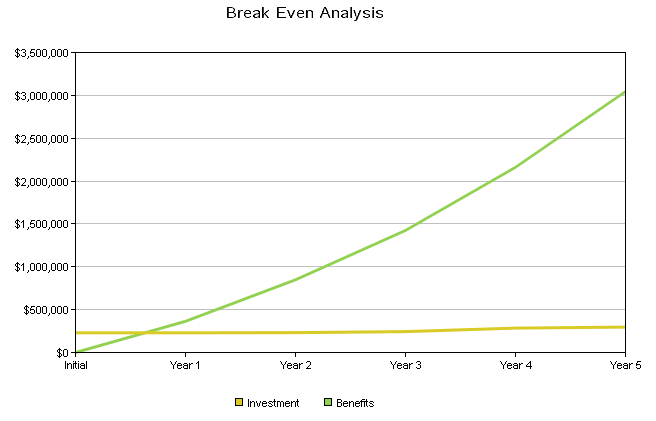
The TCO Analysis page also summarizes your initial investment expenses, your five-year expenses, your total five-year benefits, your total ROI, and estimated payback time in months. The calculator also provides you with a graphical representation of the costs associated with your current solution versus the equivalent IBM PureFlex one. Finally, the report presents you with a graphical Break Even Analysis displaying your costs vs. benefits over a five year period.
As with any such automated analysis, there are factors that are specific to your circumstances that might alter your actual numbers and outcomes. This calculator provides you with a reasonable estimate based on your answers to the questions but can’t evaluate every scenario.

I challenge you to dedicate a few hours of research into your current solution and invest fifteen minutes into the TCO/ROI Tool to make the comparison. This PureFlex System comparison could save you a significant amount of money–a move that makes everyone happy–from managers to shareholders to customers. Take the IBM PureFlex Systems TCO challenge and post your savings numbers here as proof of the possibilities of moving to a PureFlex environment.
*As noted on the IBM PureFlex System Configuration page, the cost of training is not included in the price, since this number will vary depending on several factors.
This post was written as part of the IBM for Midsize Business program, which provides midsize businesses with the tools, expertise and solutions they need to become engines of a smarter planet.
I’ve been compensated to contribute to this program, but the opinions expressed in this post are my own and don’t necessarily represent IBM’s positions, strategies or opinions.
The IBM PowerLinux 7R4 Interview with Chuck Bryan (Podcast)

The IBM PowerLinux 7R4 Server.
Chuck Bryan, Team Leader for Linux on Power Systems, and I discuss Power 7 and Power 7+ Systems, the power behind the famous Watson computer, and the recent Linux on Power Systems announcement from IBM, the IBM PowerLinux 7R4 server.
PowerLinux systems run industry standard Red Hat Enterprise Linux or SUSE Linux Enterprise Server. You can also partition Power Systems using PowerVM virtualization tools to run Linux, AIX, or IBM i applications.
Length: 23:54 minutes. Format: MP3. Rating: G
The embedded player requires Adobe Flash. If you need a different delivery method, please notify me.
This interview focuses on IBM’s announcement about the new PowerLinux System (PowerLinux 7R4) for analytics and cloud computing. The PowerLinux 7R4 server is the same technology behind Watson. The purpose of the PowerLinux 7R4 is to provide businesses with a system that is an energy and cost-efficient computing platform to run your data-centric workloads for analytics, transaction processing, applications, and other compute-intense workloads.
The Power Systems line provides you with a secure, reliable computing and energy efficient virtualization platform.
An interesting addition to IBM’s announcement, that Chuck discusses during the podcast, is that IBM has partnered with EnterpriseDB, the company that develops and supports the open source database, PostgreSQL, to bring you a low-cost, Oracle-compatible solution. EnterpriseDB’s Postgres Plus Advanced Server allows you to seamlessly migrate off of Oracle and onto an equally capable database (RDBMS) for a fraction of Oracle’s cost.
In May 2013 IBM opened the world’s first IBM’s Power Systems Linux Center in Beijing, China and in June 2013 IBM announced its intention to open two more IBM Power Systems Linux Centers in New York and Austin, TX.
This post was written as part of the IBM for Midsize Business program, which provides midsize businesses with the tools, expertise and solutions they need to become engines of a smarter planet.
I’ve been compensated to contribute to this program, but the opinions expressed in this post are my own and don’t necessarily represent IBM’s positions, strategies or opinions.
IBM Flex-es its computing muscle again by going ‘Beyond Blades’
 This week IBM announced exciting news about new offerings within the Flex System. These offerings will help the system fully evolve into a high-performance, reliable, secure and cloud-based system that can be tailored to meet every SMB’s unique IT needs. Users will enjoy integrated computing, storage, networking resources that are both easy to use and adaptable to dynamic external conditions.
IBM’s new Flex systems go beyond blades to bring you truly integrated compute, storage, networking, and management into a modular and flexible system. It’s also the industry’s first 40GB bandwidths and integrated SAN.
What this means for SMBs is flexible, scalable, and customizable systems that can grow with business needs. The new modular Flex System is perfect for SMBs who are budget conscious in that this new Flex System provides more compute power per dollar than any comparable hardware on the market.
And IBM is going beyond blades in another way by designing its systems as ‘compute nodes’ and giving you the capability to support the equivalent of 28 compute nodes per IBM Flex System Enterprise Chassis.
“With a broad range of x86 and IBM POWER compute nodes, the Flex System V7000 storage node, enhanced networking capabilities and sophisticated system management capabilities, you can upgrade your existing blade server infrastructure and make your IT simpler, more flexible, more open, and more efficient.”
To learn more about IBM’s Flex System technology, watch the IBM Flex System video or connect to IBM’s Flex System page describing the technology and the new game changing improvements in detail.
This post was written as part of the IBM for Midsize Business program, which provides midsize businesses with the tools, expertise and solutions they need to become engines of a smarter planet.
I’ve been compensated to contribute to this program, but the opinions expressed in this post are my own and don’t necessarily represent IBM’s positions, strategies or opinions.
Overcoming the barriers of going global through cloud and mobile technologies
 In a previous post, “Transforming your company with cloud, mobile and MSPs“, I stated that these technologies level the playing field for companies wishing to break into a global marketplace. And it’s true, it does but barriers still exist, although the barriers are far lower than they were prior to the new “cloud revolution”. One of those barriers is expertise. Technology expertise, or the lack of that expertise actually, prevents many entrepreneurs and existing companies from taking that big global leap. There’s an excellent article by John Mason, General Manager, Midmarket Business, IBM, on this very topic titled, “When Small Businesses use Cloud and Mobile to Go Global.”
In the article, John describes the relationship between cloud and mobile technologies and how companies can harness these to launch their businesses on a global scale.
The problem that entrepreneurs face in their global business quest is that there is a clear disconnect between the technology and implementation of that technology towards a new market strategy. In other, more simple terms, there are no clear cut road maps to making that transition.
But it’s not all gloom and doom for the would-be global entrepreneur. Help is available.
In fact, John’s group at IBM can help with that. He speaks from a position of knowledge, authority, and history on the topic of global business and global opportunity. IBM, after all, since its official founding in 1911, was one of the first, if not the first, international (global) technology company. Additionally, it was also IBM that pioneered the technologies that we now refer to as “cloud computing”.
The underlying technologies might not interest you as a business owner or global business entrepreneur but what you need to know is that to overcome the remaining barriers to global business, you need a company, and its partners, behind you that blazed the global business trail.
But how can cloud computing and mobile technologies help launch your business into the global business arena?
John gives multiple examples in his article of how it works. For example, he states, “More and more small farmers are today harnessing the power of mobile to help them connect to agricultural services, information and markets. With a few taps, farmers in remote areas can obtain information about the optimum time to plant their seeds, the right way to keep pests at bay, or the best market in which to sell their crops.”
The keywords in his example are, “the best market in which to sell their crops.” What is the best market? Domestic? Foreign? If it’s foreign, the farmer has to connect to those markets. He has to schedule delivery, negotiate pricing, and then deliver the crops. How does a small farmer make that transition?
The answer is technology.
To overcome the barriers, you have to engage expertise that you don’t have. You have to find someone who’s been there and done that. And you have to find someone who’s done it many times before–successfully.
Moving to a global marketplace has never been easier but there are still barriers. You need a partner who knows the way.
This post was written as part of the IBM for Midsize Business program, which provides midsize businesses with the tools, expertise and solutions they need to become engines of a smarter planet.
I’ve been compensated to contribute to this program, but the opinions expressed in this post are my own and don’t necessarily represent IBM’s positions, strategies or opinions.
Transforming your company with cloud, mobile and MSPs
 I just watched a video where IBM and two IBM partners discuss Managed Service Providers (MSPs), cloud, mobile, and transforming your business with technology. The video is part of a new IBM series targeting SMBs and demonstrating how cloud, mobile, and their MSP partners can transform or launch your business for very little money. They call the series Coffee and Conversation. It’s a casual and relaxed conversation over coffee about technological transformation. The two companies represented in this first video are CloudView and WakaDigital.
The message of the video is clear: MSPs can help transform or launch your business for little money and give you the global exposure and agility required to succeed in today’s market.
It sounds simple and it is simple.
Personally, if I were to launch a new business today, I would not lease office space. I wouldn’t buy or even lease a bunch of hardware for my own server room. I certainly wouldn’t go into massive and crushing debt to acquire the hardware, software, support staff, maintenance contracts, and the myriad of costly services and personnel required to run the business.
I would work out of my home, comfortably in my home office, and use an MSP and cloud technologies to empower me to:
- Appear as a larger company.
- Quickly spin up a usable computing infrastructure.
- Enable my customers to interact with me via mobile and cloud technologies.
- Allow customers to purchase my products and services securely online.
- Be everywhere at once.
Now I know that sounds far-fetched but it isn’t. Finding the right business partners is essential to your success. Your MSP is your business partner. It provides everything you need to run your business from a technology perspective.
All you have to worry about is how to manage your supply chain, contingent workers, and accounting. But guess what? IBM has a solution for all of those problems too. Their partners cover the gamut of every needed service and possible line of support that you need.
As Leila Ashley (CloudView) says in the video, this new agile business model “levels the playing field” for SMBs who need to compete with hungry start-ups, as well as, established, well-funded enterprises. Ms. Ashley goes on to zero in on an important aspect of this new business model by stating that they can launch an e-commerce site in a day’s time instead of a week. What she’s telling you is that you can effectively have an idea at 8AM and realize that dream by 5PM the same day.
You don’t have to wait for proof of concepts, ordering new hardware, procuring software, installing, patching, and updating any operating systems or applications. You have an agile, automated solution waiting for you with very few obstacles and very low entry barriers.
Business is different today than it was even ten years ago. Cloud technologies and agile systems allow us to respond to changing business needs, to test new products and new markets without a heavy capital investment, and without long delays. We can now respond within the windows of opportunity that present themselves to us. That is true agility.
And what about businesses that can’t make the transition?
Denise Garth (IBM) makes an excellent point in the video by observing that businesses either will transform or possibly become irrelevant.
Forty years ago, you weren’t relevant if you didn’t have a Yellow Pages ad. Ten years ago, you weren’t relevant if you didn’t have a website. Today and tomorrow, you might become irrelevant if you can’t meet the challenges of a transformed business. Sure, some might say that business is business and people don’t change but, on the other hand, technology has transformed the customer into a technologically-connected buyer. That’s relevant to any business.
Businesses must transform to meet the needs of the new customer paradigm. Online, agile, cloud-oriented, connected, mobile, and social media-savvy is the new business paradigm.
IBM’s MSP partners can help you transform your business. Level the playing field by contacting IBM and its partners and go have a cup of coffee.
While you’re sipping on that hot cup of bean juice, take a look at how other companies just like yours are being transformed.
This post was written as part of the IBM for Midsize Business program, which provides midsize businesses with the tools, expertise and solutions they need to become engines of a smarter planet.
I’ve been compensated to contribute to this program, but the opinions expressed in this post are my own and don’t necessarily represent IBM’s positions, strategies or opinions.
Leveraging Next-Generation MSPs for Agile Business Strategies
 Managed Service Providers (MSPs) have taken on a whole new role in the IT service and support business—that of the Agile Business Enabler. And this moniker isn’t just another marketing buzzterm, it’s a real thing. Since Chuck Calio has told us What a next-generation MSP looks like and Timothy Tsao has told us not only what a next-generation MSP looks like but also how it acts, I’ve decided to focus on one particular aspect (#4) of Timothy’s described actions—agility.
In my opinion, agility is the most important “action” that an MSP can take to increase its business by enabling its customers to become more responsive to marketing campaigns, to changing business needs, and to the needs of its customer’s customers.
Business agility is the ability of a business to respond to, to act on, and to predict business trends. Whether those trends are driven by new technologies, by the latest fad, or by the season; businesses need to respond quickly and decisively to these changes. The role of the MSP is to enable their customers to do this seamlessly and without intervention.

Become a Next-Generation MSP at Edge 2013
The best strategy for MSPs to enable businesses to become agile is to create customer portals that allow for automated infrastructure management. Many MSPs already have such portals in place but perhaps the missing link is the scalability of the solutions offered to customers.
As Timothy Tsao suggests, one way to offer agile solutions is to invest in next-generation systems and storage that allow customers to “spin up client applications and new services in minutes, not days.”
That single term, “investment” is the most important one in that sentence. As both Tsao and Calio state, cloud services are trending toward commoditization. Investment in next generation technologies requires capital expenditure, which means a lag time between that investment and its financial return. This situation often results in a fiscal Catch 22. You can’t invest until you have the business justification for it and you can’t acquire new business until you’ve made the investment.
I believe that MSPs must take the risk and invest in a “Field of Dreams” approach to acquiring new business and enhancing services for current customers.
The way MSPs become next-generation MSPs is through investment and through this new agility-enabled approach to their customer’s businesses. In other words, for MSPs to realize a next-generation shift, they must focus on their customer’s businesses and their customer’s customers. That, in part, is how I define “next generation.” The MSP must not only invest in new technology but also must focus on that next generation of customers.
See Also:
IBM Offers $4 Billion in SMB Financing

This post was written as part of the IBM for Midsize Business program, which provides midsize businesses with the tools, expertise and solutions they need to become engines of a smarter planet.
I’ve been compensated to contribute to this program, but the opinions expressed in this post are my own and don’t necessarily represent IBM’s positions, strategies or opinions.

 Techopedia
- An error has occurred; the feed is probably down. Try again later.
Datamation
- Google and NextEra Strike AI-Powered Grid Deal
- NYT Sues Perplexity AI in Copyright Conflict
- Cloudflare Outage Affects Major Websites
- OpenAI Forces AI to Confess Its Lies
- OpenAI Declares Code Red as Google’s Gemini 3 Threatens ChatGPT
- Coupang Breach Exposes 33.7M South Koreans’ Data
- ChatGPT Celebrates Third Anniversary
- Asahi Group Reveals Findings of Cyberattack
- OpenAI Discloses Mixpanel Security Incident Affecting Some API Users
- Firefox Zero-Day Flaw Exposed 180M Users

 The Frugal Networker
You must be logged in to post a comment.