Archive
Adorama’s Top Photographer with Nigel Barker Adds Powerhouse Photographers to Guest Judge Lineup
|


The Sixth Flag Recognized as a Representative Vendor in Gartner’s Market Guide for DaaS
 Raleigh, N.C. – August 10, 2016—The Sixth Flag, a leading Enterprise Desktop-As-A-Service solution, today announced that it has been identified as a representative vendor in Gartner’s recently published Market Guide for Desktop as a Service report authored by Nathan Hill, Tiny Haynes, Michael A. Silver, and Federica Troni, published August 1, 2016.
“We are delighted to again be mentioned by Gartner among DaaS vendors. Our just released concurrent pricing model, also highlighted in the report, offers customers flexibility regardless of company size. With the increased demand for enterprise BYOD, The Sixth Flag offers an attractive alternative to furnishing end users with costly hardware. BYOD and complementary solutions like The Sixth Flag not only reduce hardware costs but also full lifecycle management, including asset tracking and recovery,” said Pete Kofod, Founder of The Sixth Flag, Inc.
In their report, Gartner notes the importance of considering full lifecycle DaaS solutions, “DaaS vendors are learning the nuances of workspace and application life cycle management beyond “simple” image hosting to develop more comprehensive solutions.”
“We are confident that with an adaptable pricing schedule and a BYOD-friendly service offering, organizations will find The Sixth Flag to be a highly compelling alternative to traditional VDI,” said Shane Yocum, VP Business Development at The Sixth Flag, Inc.
Enterprise technology leaders should consider two circumstances in which BYOD is particularly attractive:
The first is the continued move to web-based applications. With more applications relying on only a browser, end point management is dramatically simplified, a key driver of BYOD adoption. With the increasingly rich capability of HTML5, even complex applications such as VDI can be delivered as a pure web-based application.
The second is application delivery from public infrastructure service providers. Because BYOD is particularly relevant for remote or mobile users, the ability to pair CAPEX savings at the client endpoint with savings in the premise datacenter make for a compelling value pairing. Enterprise IT managers are then allowed to focus on what truly “pays the bills”, delivering applications to users that increase individual an organizational effectiveness.
The Sixth Flag is a web-based VDI as a service offering delivered from public infrastructure. With BYOD, there is no CAPEX in most configurations and operating costs can be tightly adjusted to match changing business conditions.
Gartner does not endorse any vendor, product or service depicted in its research publications, and does not advise technology users to select only those vendors with the highest ratings or other designation. Gartner research publications consist of the opinions of Gartner’s research organization and should not be construed as statements of fact. Gartner disclaims all warranties, expressed or implied, with respect to this research, including any warranties of merchantability or fitness for a particular purpose.
About The Sixth Flag, Inc.
The Sixth Flag Inc, is a Raleigh, North Carolina-based Desktop-As-A-Service firm for global teams and organizations in need of Remote Desktop Management solutions. Launched in 2015, TSF provides a web-based, cost effective and secure throw away desktop for today’s global, mobile teams. Its cloud-based, HTML-rendered Desktop-As-A-Service requires no dedicated hardware, thereby eliminating the need for organizations to spend on capital outlay. With nothing more than a browser, users can access their corporate desktop from anywhere in the world, whether from a laptop, desktop, or tablet. Because user data is not stored on the local device, loss of a device does not represent compromise of sensitive organizational data. For more information, visit www.thesixthflag.com.
IT Security as a “Gated Community”
Why workers are a threat organizations can no longer ignore
 By Stacy Leidwinger, VP of Products at RES
When one thinks about keeping the home and family secure, the first thought is to take up residence in a secure location – ideally, a guarded and gated community. The second is to carefully secure the perimeter of the house itself: the doors and windows – the points of ingress. Sensors are wired to each opening, cameras and motion detectors are aimed at carefully selected places, and monitoring is switched on. When it’s all plugged in and working, we are confident that our homes are safe. But we also need to keep track of the residents of the home and ensure their cooperation with security measures. Who has a key? Or a garage door opener? Do they routinely close and lock the windows? Because even the finest perimeter defenses are readily breached by the actions, intentional or not, of residents. What can happen when someone leaves a key under the doormat for an expected visitor? Or a garage door is mistakenly left open as the owner drives off to work?
In our gated community example, our traditional defense is focused on securing entry and exit points, and assuming that residents will make no action to breach security. And in the vast majority of cases that will prove just fine. But we in our houses are not continually subject to attackers seeking to trick or cajole us into one simple mistake; a mistake that, once taken, will crack the most airtight security, exposing our homes to the depredations of criminals.
When cybersecurity measures are focused entirely on the perimeter, the organization does nothing to mitigate its greatest risk: the workers whose actions can breach the most secure perimeter defense with a single, careless mouse click.
Secure perimeters require secure workers
An organization’s workers are its chief assets – the means by which value is delivered. But they’re also a massive liability in terms of cybersecurity. And new trends within the technology-enabled workforce are making things far worse.
Today’s IT organizations are expected to equip their workforces with the devices that make the most sense for the organization, while also satisfying the ever more demanding individual worker. Whether it’s supporting preferences between Mac and PC, providing immediate access to apps and services, or allowing workers to use their own mobile devices for work, the workspace has truly become digitized – and therefore more vulnerable, compared to the days when each worker had his or her own locked-down desktop PC, and worked exclusively from the office. But as IT continues to support mobile work-style requirements, a whole slew of security-related IT issues are being raised; and the most serious threats to today’s security are stemming from the inside.
In a time of “do more with less,” IT departments are struggling to provide basic protections against malware, ransomware and spyware, and to secure firewalls to prevent outsider attacks. But is enough attention being paid to those they trust the most – their own workers?
This insider threat is no secret. A recent global study by Kensington entitled “Voice of IT” revealed that IT executives pegged the following as their biggest pain points when it comes to IT: human error, lack of process and workers not following established processes.
What can companies to do streamline IT processes and find solutions to insider threats? After all, within the “gated community” of organizational security, the user is the last line of defense.
A Gap too Big to Span?
One of the biggest debates in recent years when it comes to the digital workspace is bridging the gap between worker enablement and security. It’s an old conundrum in IT: new technologies are constantly being layered into the infrastructure, but hardly anything is ever thrown away. The result is a hodgepodge of hybrid technologies seeking to solve the same problems. And this is far from invisible to workers, who are often required to shift from app to app, from physical to virtual, in an awkward sequence of steps that has them longing for the relative simplicity of the consumer technologies they enjoy at home.
And IT security is perhaps the greatest culprit in the disruption of worker productivity. Is your organization overwhelming your workers with too many checkpoints to cross and too many updates to install? Are your existing security systems working together? And if so, are they working together seamlessly?
Organizations must create a safety net around their workers – the risks of cyberattack are too great to do otherwise – but they must do it in a way that doesn’t inhibit individual productivity, allowing workers to work when and where they choose, on the devices that are most productive for them. And all this must be accomplished with safety controls in place to prevent them from being the source – witting or otherwise – of security threats.
Yes, there are Solutions
IT must be continually on the defensive, protecting workers and the infrastructure from easy-to-make, yet potentially tragic mistakes. And, good news: there are several decisive steps an organization can make that will secure the organizational community without undue hampering of workers.
- Deploy automated, context-aware access controls
Automate the many processes and workflows that govern the access each worker has to apps, databases and services within his or her digital workspace. Technology is available now that will:
- Govern what resources can be accessed for each person, based on their immediate working contexts (including the devices being used, physical locations and time of day)
- Automatically provision and de-provision those resources as needed based on that working context
- Track that access gathering data necessary for guaranteed, easy audits.
- Low-maintenance whitelisting with automation
Human behavior is your greatest security risk. And today’s cybercrooks are becoming increasingly creative in their attempts to exploit human inattention. Context aware whitelisting and blacklisting can ensure that only permitted apps can be executed; and the list of permitted apps can be governed by IT based on what the business chooses to allow, and each individual worker’s context at the moment access is attempted. Whitelisting adds a thick layer of protection by only allowing approved executables to be opened.
Although many organizations have some form of whitelisting in place, maintenance burdens can be high for traditional solutions. A new approach can not only use automation to better maintain the whitelist, but can add user safeguards by automatically verifying unique file signatures. This ensures that the files being executed are authentic and that workers aren’t being tricked into opening different infected files.
- Automate the onboarding and offboarding of workers
More than 13% of workers can still access a previous employer’s systems using their old credentials. And there’s much more. In a study on rogue access, Intermedia found that 89% of ex-workers retain access to at least one app from a former employer. 49% actually logged into an account they were supposed to no longer have access to. 45% retained access to confidential data.
When employees leave the organization, that is the moment they pose perhaps the greatest risk to the organization. IT must tightly integrate de-provisioning processes into existing human resource apps, project management systems and other enterprise identity stores. Doing so allows worker access qualifications to be automatically managed and altered each time a worker’s identity status is changed in those systems. With a more holistic approach to identity lifecycle management, organizations can significantly improve productivity, compliance and security – and prevent former employees from exposing the organization’s data and systems to extremely high risk.
- Stamp Out “Shadow IT”
Today’s crop of workers are productive like never before, thanks to the incredible technology available through modern digital workspaces. But this productivity also breeds an “I need it right now” attitude towards new technologies. And if IT can’t provide it “right now”? Often the worker’s solution is just a log in or credit card away, with ubiquitous cloud-based solutions studding the skies overhead.
The risks are great. IT must prevent employees from taking matters into their own hands to solve IT issues. But is shadow IT best prevented by hiring an army of alert IT professionals, available 24/7? Or is there an easier (and cheaper) solution? Yes! Through automation, IT can provide on-demand self-service access to the apps and services workers need, and prevent workers from circumventing access rules. This can include password management, access to a new data drive, or a request for a particular workspace app. The best way to prevent workers from going around procedures is to give them an instantaneous, trackable and reliable way to get what they need from IT. No hassles. No tickets. No violations.
Security should come naturally to an organization, but it will likely never become second nature to many of your workers. When we’re at home, we’re surrounded by a sense of security – no matter how real or illusory it truly is. Many of us don’t truly think about security unless our perimeter is breached. But IT can build a powerful security shroud around its systems, its data and its workers, by using automation and self service to simplify security processes, empowering workers to focus on their responsibilities without disruption, and keeping the enterprise safe from intrusion.
To be sure, no security solution is perfect. But we owe it to our organizations and our fellow workers to do our very best.
Introducing the Polaroid Travel Tripod and Polaroid Varipod Two-in-One Telescoping Monopod
 RIDGEFIELD PARK, NJ – August 4, 2016 – Complementing its growing collection of camera accessories, Polaroid has recently added the Polaroid pro series 55” carbon fiber travel tripod and the Polaroid varipod two-in-one telescoping camera monopod to its repertoire. Available today through Amazon, the Polaroid travel tripod and monopod are ideal for everyone from the casual photographer or videographer to the serious prosumer looking for extra stability and versatility to capture that unforgettable shot.
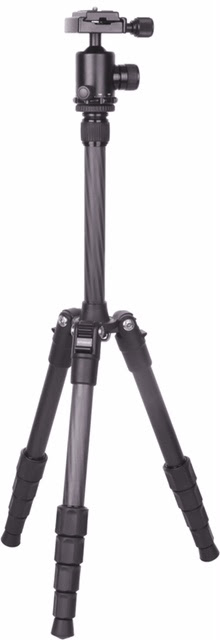 About the Polaroid Travel Tripod
Designed for the on-the-go photographer and videographer, the Polaroid travel tripod offers intelligent features like a fluid pan-head, braced center columns and adjustable spider legs with non-slip foot grips that handle uneven and rugged terrain. Thanks to its carbon fiber body, the Polaroid travel tripod is up to 50% lighter than its metal counterparts, with rugged durability to withstand the rigors of shooting on the go. The fully articulating ball head and removable plate offer photographers and videographers the ability to capture the perfect shot from just about any angle.
Polaroid travel tripod feature highlights include:
- A 100% carbon fiber body, 50% lighter than metal yet just as durable
- An extension height of over 55”
- A compactable size of just 12.5”
- Weighs less than three pounds with the ability to hold up to 20 pounds
- An included travel tripod carrying case
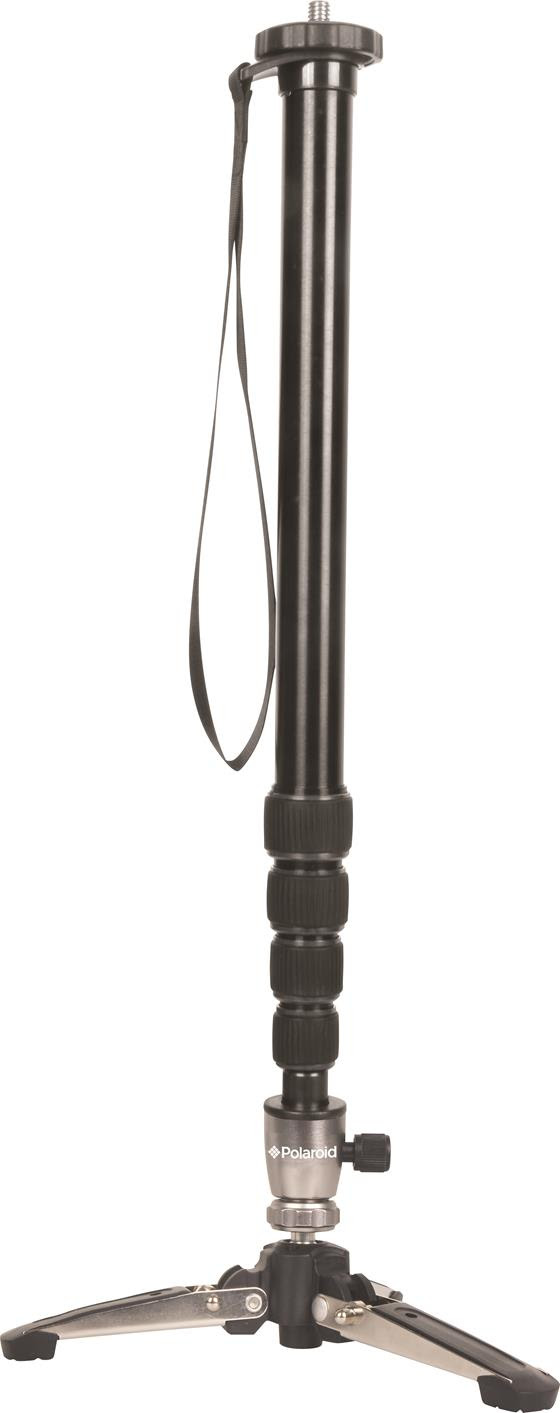 About the Polaroid Varipod Monopod
The Polaroid varipod two-in-one telescoping monopod can be used as both a monopod and a tripod, both of which offer incredible extended reach. Its rugged form-factor makes it ideal for shooting in any condition. With a removable four-inch tripod base, the Polaroid varipod monopod provides camera height where it is needed the most. Professional photographers and videographers will love this tool for its inclusive features, fine positioning controls and ability to stabilize difficult-to-capture shots.
Polaroid varipod monopod feature highlights include:
- A two-in-one monopod and tripod base that can be used independently or together
- Locking tripod feet with rubber grip pads
- An extension height of 65”
- A base tilt angle, rotation and telescoping section locks for secure positioning
- An included removable wrist strap and shoulder carrying bag
Pricing and Availability
The Polaroid travel tripod is now available via Amazon for 99.99 USD and ships with a fully articulating ball head with removable plate and travel tripod carrying case. The Polaroidvaripod monopod is now available via Amazon for 54.46 USD and ships with a removable wrist strap and a shoulder carrying bag.
Request a Media Review Kit
Members of the media are invited to review the Polaroid travel tripod and the Polaroidvaripod monopod. To request a media review kit sample, please contact Mariah Stein atmariah@zazilmediagroup.com.
The Polaroid Brand
Polaroid is one of the most trusted, well-respected and recognizable brands with a rich 75-year history beginning with Polaroid instant film. Our range of products include instant and digital still cameras, high-definition and mountable sports video cameras, tablets and flat-screen TVs that deliver the fun, instant gratification and value for which the brand has long stood. Today, the Polaroid Classic Border Logo rooted in our beginnings of instant photo sharing serves to designate genuine Polaroid branded products. For more information, visit http://www.Polaroid.com.
Polaroid, Polaroid & Pixel, Polaroid Color Spectrum and Polaroid Classic Border Logo are trademarks of PLR IP Holdings, LLC, used under license.

 Techopedia
- An error has occurred; the feed is probably down. Try again later.
Datamation
- USA₮ Modernizes American Payments with High-Impact St. Patrick’s Day Activation in Times Square
- Google and NextEra Strike AI-Powered Grid Deal
- NYT Sues Perplexity AI in Copyright Conflict
- Cloudflare Outage Affects Major Websites
- OpenAI Forces AI to Confess Its Lies
- OpenAI Declares Code Red as Google’s Gemini 3 Threatens ChatGPT
- Coupang Breach Exposes 33.7M South Koreans’ Data
- ChatGPT Celebrates Third Anniversary
- Asahi Group Reveals Findings of Cyberattack
- OpenAI Discloses Mixpanel Security Incident Affecting Some API Users

 The Frugal Networker
You must be logged in to post a comment.