Archive
Start Your Own MSP Business with Pulseway’s SaaS Enterprise Server
 Pulseway SaaS Enterprise Server
Pulseway
Pricing
Pulseway’s new SaaS Enterprise Server enables small Managed Service Providers to leverage the cloud for system and service monitoring, real-time alert notification, and granular remote management of a diverse array of operating systems and applications. If you’ve ever wanted to go into business for yourself as an MSP, there’s no better time or no better software to get you there.
When you think of managed services or managed services providers (MSPs), you might assume that they’re all staffed by dozens or perhaps hundreds of people working around the clock to support their customers. That might be true for a small percentage of MSPs, but did you know that most MSP businesses have fewer than 50 employees? The MSP space is growing at a double-digit pace and some MSPs report triple-digit growth. And this isn’t a trend that just began with the introduction of cloud technologies, it’s been growing at or near this rate since 2000. Smaller MSPs see higher rates of growth than their larger counterparts do.
From the MSPmentor 501: 2013 Edition:
Generally speaking, the largest MSPs continue to enjoy success, but in many cases annual growth rates for large MSPs have slowed to single-digits. The fastest-growing MSPs are those that successfully blended mobile, hybrid cloud and application-level management. Also, many of the top-rated MSPs are thriving in extremely targeted markets – such as the hedge fund vertical.
If you think that the MSP market is saturated, it isn’t. In fact, it’s far from it with these kinds of reported growth numbers. MSPs that deliver great service at competitive prices have the most success, even in markets or locations that appear overcrowded.
With Pulseway’s SaaS Enterprise Server, not only can you setup monitoring and alert notifications for a variety of systems, services, and applications, but you can also manage those systems from any device, including mobile devices via Pulseway’s secure apps.
For more videos that demonstrate Pulseway’s mobile management, check out the Pulseway YouTube Channel.
With Pulseway’s service, you can monitor and completely manage Mac OS X, Windows, and Linux systems. You have fully control over each operating system within the same interface. And you can monitor and manage desktop or server systems. Heterogeneous environments are no problem for Pulseway.
You can configure custom monitoring, alerting, and management for all your systems either through the easy to use Windows application or by editing the /etc/pulseway/config.xml file on Linux and Mac OS X systems.
On Windows, you can optionally select to manage the following advanced services:
- Active Directory
- Exchange Server
- Hyper-V
- IIS
- SCOM
- SQL Server
- Windows Backups
- VMware hosts
- XenServer hosts
- Amazon services
- Azure services
- SNMP
- ESET Remote Administrator
You can also manage notifications for host status, ping of various other hosts, storage, website availability, and SSL certification expiration.
Download the Pulseway agents and get started right away with the standard, free option or you can take the 30-day free trial of the SaaS Enterprise Server.
Pulseway’s friendly interface and quick setup are perfect for consultancies and MSPs who want to offer a wider range of services, remote management, and real-time monitoring for their customers. There’s no lengthy training required, no huge licensing fees, no datacenter equipment maintenance, and no hassles or long-term contracts to prevent you from adding Pulseway to your toolbox.
- Run command line commands (All operating systems).
- Run PowerShell commands (Windows).
- Carry on real-time chat with users.
- Logoff the current user or lock the desktop.
- Restart, Shutdown, Power off, Suspend, or Hibernate the system.
- Enter Maintenance Mode.
- Perform Windows Updates.
- Uninstall software.
- Manage security settings.
- Kill or restart processes.
- View Event Logs.
- View disk space and browse filesystems.
From a technical perspective, Pulseway’s management capability gives you deep insight into your monitored systems. From command line interface, to service management, to filesystem access; you have it all at your fingertips, literally, with Pulseway’s mobile app. You can stop, start, and restart services. You can issue commands at the command line with any operating system. On Windows, you have the added capability of being able to issue PowerShell cmdlets. You can apply Windows Updates to Windows operating systems. You can update Linux systems via the command line. And you can connect via RDP to your Windows systems for a full graphical desktop-level experience.
“It is an invaluable tool to follow up on alerts from our monitoring system while on the road – no need to connect via VPN and log on to the troubled server. The support for Pulseway is awesome.”
Brian Hansen, System Administrator / eBay
Pulseway is a frugal choice for MSPs and consultants because you don’t have to spend a lot of money to setup your own infrastructure, you don’t have to hire a team of support people to monitor and manage it, and you don’t have to worry about some crazy licensing scheme that extracts all of your profits from your business.
Pulseway is enterprise monitoring, alerting, and management for all your computers that allows you to monitor 24x7x365, receive alerts, respond to problems no matter where you are, and from any device.
Get To Know an MSP: Kalleo Technologies
 Kalleo Technologies
Managed IT Support Services
Paducah, KY
(270) 908-4136
info@kalleo.net
sales@kalleo.net
CEO – Doug Truitt
Kalleo Technologies (Kalleo) CEO, Doug Truitt, and I had a good conversation about his company, its history, the company philosophy, and its services. First, is Kalleo’s interesting location: Paducah, Kentucky. Paducah is a centrally located city that’s surrounded by universities and other industries. Paducah was a strategic location during the American Civil War and remains as a significant railroad hub today.
I can’t really relay Doug’s philosophy better than he can:
After many years of being involved with IT organizations large and small we found that the traditional IT vendor to client relationship was fundamentally flawed. That relationship, typically referred to as a “break-fix” model of IT support, provides little incentive for the IT vendor to prevent clients from experiencing problems. When something breaks, the client pays the vendor to fix the problem.
We believed – and have subsequently proven – that proactively managing your network always costs less, always improves systems’ uptime, and always improves the IT vendor to client relationship. Kalleo Technologies’ proactive, flat rate approach to IT support ensures our goals and incentives match those of our clients. Because we charge a flat rate for service, we make the same amount of money whether things are running smoothly or whether they are breaking. If things are breaking, our costs go up and our profit goes down, incentivizing us, as your partner, to keep things running smoothly.
Next, is Kalleo’s flat rate philosophy. I really like the Kalleo flat rate approach. It means that you pay a flat rate to engage Kalleo Technologies’ support, but only pay that flat rate whether or not things are broken. For example, you pay a flat rate for January and nothing goes wrong, but in February, there’s major patching to be done or there’s a new virus out that require a lot of hands-on time–you pay the flat rate again for February.
It’s a win-win situation, because regardless of your situation, you know how much you’ll be charged each month for service. And just because you’re being charged without anything being “broken” doesn’t mean that Kalleo isn’t doing anything. They still work in the background, making sure that your systems are updated, patched, and functioning normally.
Peace of mind and proactive maintenance are invaluable to any company. You must realize how important and significant this “behind the scenes” work really is to the smooth operation of your company and its computing assets.
Kalleo’s Support Model:
1. Proactive Maintenance
2. Help Desk Support
3. Rented A/V
4. IT Toolset
5. Vendor Management
Finally, Doug’s team isn’t interested in taking over your IT department, they’re there as staff augmentation, which means that they serve your company on-demand. For example, let’s say that you have a project that requires 20 FTEs working for two weeks–a desktop operating system upgrade for 500 employees. You have four employees in your IT staff. As a managed services provider, Kalleo’s team could come in and execute that migration without disturbing your employees or your full-time staff.
And Kalleo isn’t just a regional provider either, it has customers all around the country including Hawaii. Obviously Kalleo is setup for remote support, so that you don’t have to wait for someone to drive or fly to your location for break/fix, patching, or regular maintenance.
Kalleo Technologies focuses its efforts on three primary verticals:
- Medical
- Government
- Transportation
Kalleo can handle large company IT augmentation and large projects as well as day-to-day support issues.
You can stay connected to Kalleo Technologies through social media at:
Among Kalleo’s extensive list of services, it offers proactive maintenance to ensure your users are up and running all the time, 24 hour monitoring, automated maintenance, remote multi-level Help Desk support, anti-virus support, optimized support tools, and vendor management.
Managed services providers (MSPs), such as Kalleo Technologies, offer companies a leveraged IT sourcing model that is often less expensive, more responsive, and better equipped to handle large projects, special support issues, break/fix, and after hours support than an internal staff is. MSPs employ a variety of IT experts, from help desk personnel up to architect-level professionals, to assist your company in migrations, projects, upgrades, and regular maintenance activities.

This post was brought to you by IBM for MSPs and opinions are my own. To read more on this topic, visit IBM’s PivotPoint. Dedicated to providing valuable insight from industry thought leaders, PivotPoint offers expertise to help you develop, differentiate and scale your business.
Go Fish: A Technology Journalist’s Torpedo Term
 If I tell you to “Go Fish,” you’d better do so and realize that there’s something awry with the product in question. I’m warning you about something and you should use your Google powers to find out what it is that I’m trying to tell you. I rarely resist telling and writing my opinions, which should be refreshing to you as a reader and as someone who wants to be educated on a particular technology, service, or company.
Allow me to explain.
As a technology journalist, product reviewer, technology writer, columnist, podcaster, videocaster, and full-time “in-the-trenches” technologist, I look at hundreds of products, services, and companies every year from one angle or another in the context of testing them for their print worthiness. I draw on my many years (20+) in this business to make those determinations and I do them with great discernment and caution. I consider it my duty as a journalist, as a writer, and as a fellow technologist to give you honest answers and assessments of those products, services, and companies. You might not always agree with me in those assessments, but know that they are honest and they are well thought out on my part.
The reason that I’m posting this is that I’m asked pretty often on Twitter, on Facebook, on LinkedIn, and through email if I’ll evaluate a particular product, service, or company. Most of the time, it’s for potential inclusion in an article or in a review. That’s the way it works. Public Relations professionals, company representatives, and interested parties ask me to look at something because they want attention for it. For those that deserve it, I’m more than happy to help out in that effort. However, there are those that don’t deserve it for one reason or another and I don’t bother with them. I don’t normally ‘pan’ a product, service, or company unless it’s something so vile, so dangerous, or so ridiculous that I have to do so.
 The Rules:
If you ask me if I like product X, service Y, or company Z, and I do, then I’ll tell you that I do. I also tell you why I do. I’ll probably also suggest that you read my articles about that product that you can easily find using your Google powers.
If you ask me and I simply direct you to an article, then it’s a signal that you should ponder it more extensively. It’s not a no, but it’s also not a yes. It’s rather a “You should look into it further and draw your own conclusions.”
If you ask me and I tell you to “Go Fish,” then brother or sister, you should beware. ‘Go Fish’ doesn’t mean that I’m telling you to go jump in the lake, but it does mean that I’m telling you that either I’ve looked and decided not to touch or I’ve looked and am a hater. In either case, you should proceed with caution. You should use your Google powers and search for “Ken Hess Product X” without the quotation marks, where ‘Product X’ is the product, service, or company in question.
Endorsements and Reviews
Just so you know, I’ll never endorse a product that I don’t like. If I like a product and would recommend it to a friend or colleague, then I’ll endorse it. That goes for reviews as well. If I review a product and give it a great review, it’s because I genuinely like the product. I recommend most of the products I’ve reviewed to other people. For example, my wife’s boss was looking for a cover for her iPad mini. I reviewed the Dux case by STM Bags back in January 2015. When she asked, my wife and I recommended this case to her. She promptly bought it and loves it. See how that works?
 Now, if she had read the review first and purchased the case based on my review of 10/10, and been unhappy because I didn’t give an honest review, that would ruin my credibility with her and with anyone else who read it and bought it. However, we loved the case. My wife uses it on her iPad and won’t ever use anything else (probably).
This is also why it takes me longer than most people to do reviews. I use the product. I don’t just open a box and mess with it for a few minutes. I put the product or service through its paces. I’m not an ‘unboxer.’ When I tell you that a product is good, great, or awesome, you can believe that my experience was just that. As always though, your mileage may vary, but I do my best to give you an honest look.
I love cool technology. I love great products. I get genuinely excited about products, services, and companies. For example, I’ve written several times about a product and company called 2X. It’s an incredible product that’s easy and fun to use. Parallels (another company I’m really excited about) bought it.
I write about my experiences with products and services. I actually use the products that I review. If I wouldn’t use them or if they don’t live up to the marketing hype, I don’t review them. For example, a company sent me a product for review and I was super excited about it and couldn’t wait to show my son. When he came over the next day, I brought it out to show him and during my demonstration, part of the product broke. He tried to fix it. I tried to fix it. I told the company about it and they offered to replace it, but I said no. I just wanted them to know that it had broken and it shouldn’t have. I didn’t abuse it; it just wasn’t made well. I didn’t post the review. It was a $99 item that didn’t last 24 hours under normal use.
 The Bottom Line
I write about technology. If I see a technology that I like, I write about it. I don’t have to be prompted, prodded, or coerced in any sort of way. I don’t write about everything I see. Some things I prefer not to mention because I don’t like to give bad reviews. I write about technology that is innovative, creative, important, intriguing, disruptive, or a combination of those. If I haven’t written about it, either I haven’t looked at it or I have and I’ve decided against writing about it.
You can ask me (please do) if I’ve seen something or taken a look at a product. If I have and I like it, you’ll know it. If I’ve looked and decided not to touch it, for whatever reason, please heed my advice and go fish.
MSPs, How Do You Get The Word Out?
 At the recent (March 26 and 27, 2015) MSPWorld keynote, Charles Weaver, CEO of MSPAlliance (The International Association of Cloud and Managed Service Providers, established 2000), discussed how alliance members should beef up their marketing efforts. And if the CEO of the MSPAlliance recognizes that there’s a gap, there’s clearly a gap in getting the word out to potential customers about their services. Traditionally marketing to potential customers meant direct mail, targeted campaigns, cold calling, email distribution lists, billboard ads, referrals, magazine ads, and online ads; but MSPs have found that generally speaking most of these methods are ineffectual. Historically MSPs have mostly relied on word-of-mouth referrals to bring new customers into the fold.
What does work for MSPs in getting the word out about their services?
Of the many different marketing strategies, referrals, blogs, email marketing, Requests for Proposals (RFPs), and cross selling offer the best returns to MSPs. Although referrals are very good in converting connections into sales, the number of them is very low. For an MSP to be successful, it has to launch a multi-front marketing campaign.
Referrals
Referrals from current customers seems to be the number one method of attracting new business for MSPs. The reason that MSPs hold referrals in such high regard is that this type of business prospecting has a high rate of return and has a very low cost to the MSP in terms of financial outlay and time required for the sales process.
Making a referral network work is a fairly easy task. Ask your customers if they could refer your services to at least one company in their customer base or within their sphere of influence. As your network grows through referrals, continue to ask for referrals from each new customer.
However effective, this type of organic growth is slow and requires some relationship nurturing to assist and to fuel the process.
Blogs
Blogs, especially guest posts in a corporate blog by customers, are effective in increasing customer base. Potential customers can read about how other companies have solved similar problems using your services and expertise. That gives the reader an immediate connection to your business and your solutions that can help them.
Sphere of Influence – a business network where companies or their officers or principals have some expressed or implied influence over others because of mutual trust, a working relationship, a partnership, or out of respect between the parties.
What you don’t want a blog to be is a pure sales pitch or a marketing tool. You want to be sure to inform and educate your reader about how your services have increased sales, streamlined processes, made it easier to buy, increased customer service, or boosted profits.
Make your blog entries about the customer and not about you. Provide real data and real customer testimonials where possible. Numbers speak louder than marketing fluff. Keep posts concise by telling a compelling story in 750 words or fewer. Post new blog entry URLs to all social media outlets to gain a diverse readership.
Email Marketing
Email distribution lists, whether created from correspondences or acquired by rental from a list broker are often a good source of prospective customers. The return rate is typically not what one would expect from such a contemporary medium. The rate of conversion is even lower. Expected rates of return are in the single digits and conversion rates are in the single digits of those returns.
The upside to email marketing is that it’s inexpensive, even if you rent or buy lists. It’s also an excellent method of getting your name in front of a lot of business influencers whether or not they buy anything from you. It often takes several iterations of a message to receive one positive return.
Rather than creating generic email messages touting your products, it’s often more effective to create a newsletter and distribute it via those lists. Newsletters aren’t seen as spam and potential customers read them with enthusiasm. To make your newsletters a welcome Inbox addition, include industry news, links to your blog entries, and information about your company and its services. Don’t make it to “salesy.” You want people to see it as having value and not just as an opportunity to deliver unwanted pitches for your services.
Optionally you can setup an opt-in/opt-out mailing list for your customers or website visitors.
Requests for Proposals
Requests for Proposals (RFPs) can be used to acquire new business by entering into competitive bid situations. RFPs often require some moderate amount of effort to create a sale because of the bidding process and submission of detailed information about your company, its leadership, its capabilities, delivery times, Service Level Agreements, and related information.
Sometimes the bidding process is lengthy (months), but the dollar amounts are also higher for these types of agreements.
Cross Selling
Cross selling is one of the most effective methods of gaining new business for MSPs. It involves selling additional services to existing customers or entering into cross promotional agreements with other vendors. Cross selling is a low cost marketing method because you’re selling to a customer who’s already bought into your services. Return on investment is very high.
Cross selling deepens the vendor-customer relationship and builds loyalty for both parties.
Social Media
Although relatively new to the marketing scene, social media selling has become one of the hottest new marketing strategies for all businesses. MSPs can ride this wave by engaging its current and its potential customers in conversations via social media. Feedback, ratings, and testimonials are all very powerful drivers of new business.
Tweet blog post URLs, post to your Facebook page often, ask for guest posts on your blog and Facebook page, engage your customers via LinkedIn, post your blog URLs to LinkedIn, and to all LinkedIn groups of which you’re a member. You have to use social media to your advantage. Check in when you’re out to lunch with a customer and tag him or her on Facebook to let everyone know that you’re entertaining a customer.
Start a conversation on Twitter with your customers. The easiest way to start a conversation is to ask a question. Gain followers by using relevant hashtags and posting often to all of your social media sites. Follow all of your customers and their customers. Follow influencers, thought leaders, and technology journalists.
Media
Use media connections and technology journalists to your advantage by scheduling interviews to be posted on their outlet sites. Use social media to promote those posts once their published. Public Relations and brand marketing firms can help you connect with the correct people for your business.
Upstream Partnerships
Your upstream partners can also send a steady flow of traffic to your site and to your attention. Your upstream partner should give you qualified leads that will help expand and extend your business. A good partner will offer you training, significant hardware and software discounts, marketing assistance, and some visibility as to who your customer base is. Leverage your partner’s resources to grow your business. Remember that a partnership works in both directions. The more you engage your partner, the more your partner will engage you and your business.
If you’re an MSP that offers top notch services to your customers, you need to get the word out. First, start in your network by asking for those referrals and then expand by putting some simple, time-tested marketing techniques to work for you. You can continue to grow your business year over year by applying marketing pressure in the right places. And don’t forget to engage your upstream partner to help with your growth because it benefits both of you.
This post was brought to you by IBM for MSPs and opinions are my own. To read more on this topic, visit IBM’s PivotPoint. Dedicated to providing valuable insight from industry thought leaders, PivotPoint offers expertise to help you develop, differentiate and scale your business.
Got Security?
 Security is a topic that’s on everyone’s minds these days. And there’s a good reasons for it: Security is important. Now, that might sound like a tremendous understatement, but it’s the truth. In fact, the truth is that security is the top concern for most of the world’s businesses. It should be. Every day you read about another significant breach of a major retail chain, of a bank, or even of a government site. Prominent companies are under constant attack from so-called “black hat” or criminal hackers whose sole purpose is to compromise data, steal valuable data, and to expose vulnerabilities in your security.
If you think that you’re safe, for whatever reason that you’ve told yourself, you aren’t. If you’ve ever had a fraud alert from a credit card company or your bank, then you realize how vulnerable you really are.
Unfortunately, as a customer of a restaurant, of a clothing store, of an online vendor, or of your corner market, you’re vulnerable to credit card and, ultimately, identity theft. While the point of this post is to inform you, rather than to scare you, please note that the threats are real and that you should take more care and practice vigilance in the use of your identity, including your credit cards, debit cards, and online accounts.
If you own a business, you owe it to yourself and to your customers to make every effort to prevent breaches of your company information, your personal information, and your customer’s information. It’s not easy to do by yourself. There’s all kinds of advice, good and bad, on the Internet about how to protect yourself, how to recover from identity theft, and how to go on the security offensive for you, your business, and your family.
Bad information is worse than no information at all. You can put yourself at greater risk by listening to alleged experts than you can by playing it smart and hiring a security consultant who can find out exactly what the bad guys can find out about you and your business.
It works something like this: If you want to find out how vulnerable your house is to break-ins, who would you hire–a clean-shaven, upstanding, taxpaying citizen who’s never been arrested for breaking and entering or would you be smarter to hire a reformed bad guy to tell you how it’s really done? If you’re smart, you’ll hire the person with a criminal background who’s gone straight to figure out where you’re vulnerabilities are.
On the same hand, if you want to test your company’s or your personal security, you should hire someone who’s hacked for a living–in the criminal sense.
That’s the service I’m offering you. I have a select group of former black hat hackers as my associates who’ll put your security through its paces. Further, we’ll help you mitigate the flaws we find* and tell you how to fix the problems.
Here is a partial listing of our services:
- Identity fraud checking/fixing
- Employee Social Engineering checking/fixing
- Website Penetration/Vulnerability analysis
- Company penetration/information grabbing
- Training and prevention
If you’re not 100 percent sure of how vulnerable you might be, here are some examples:
About four years ago, I bought a cake from a local bakery and used my debit card for the purchase. One of the workers there used my card to buy pizza and some other things that he’d had delivered to his girlfriend’s house. Once I found the fraudulent charges, I tracked him down, via his girlfriend and confronted him. I won’t go into detail, but I did make an impression. The bank investigated and made good on the losses to my account.
That scenario is common, except for the part where you get to confront the perpetrator. Typically, the guilty party is so far away that you’ll never find him. Bad for you, but great for him.
My wife paid my son’s technical school tuition with a credit card only to find later that we’d been charged an additional $1,800 for services that we’d never heard of, much less purchased. We contacted the vendor and explained the situation and they promptly removed the charges.
I receive calls from unknown numbers on a weekly basis, trying to have me answer so that my phone can be charged bogus fees or to verify my number for fraudulent charges. I Google the numbers to verify their legitimacy. So far, all of them have been sources of fraud.
Yes, these things actually happened to me/us. These are only three examples and we’re only one family in 750 million that’s had our accounts or cards compromised. Think about the repercussions of poor security on you, your family, and your business. Your integrity and reputation, not to mention your credit score, are at risk. It’s made us all a lot smarter about how we transact business these days.
So that you realize that we’re trying to help you, I’m going to offer you a free list of 10 things you can do to make yourself more secure today.
- Google yourself – Contact all of the “public information” carriers/resellers and have them remove your information from their databases.
- Do Not Call lists – Go to https://www.donotcall.gov/ and register to have your phone numbers removed.
- Mall survey cards – Never fill out one of those mall survey cards or enter any contest at a mall or other retail establishment.
- Unrecognized phone numbers – Never answer calls to your cell phone when you don’t recognize the phone number.
- Use cash – Carry cash with you and avoid using credit/debit cards as much as possible.
- Email attachments – Don’t open email attachments that don’t make sense and don’t respond to those emails.
- Nigerian Princes – Never respond to any email from a Nigerian Prince who wants you to deposit money in a bank account for him.
- Ignore “You’re a Winner!” emails – If you didn’t enter it, you didn’t win it.
- Passwords/SSNs – Never give your passwords or Social Security Numbers to anyone over the phone.
- Account-oriented emails – No online service will ever request your password or a login via email.
If you’d like to discuss your security or your security concerns, you may contact me via email at ken@kenhess.com. I’ll be glad to setup a time to call you and discuss your concerns and how we can help you get a handle on your personal or business security. Don’t be a victim. Don’t be a statistic. Learn to fight back by finding out what the bad guys know about you and how to fix it.
*Ask about our 50 percent rebate plan.
Using an MSP is not the same as outsourcing
 There is a common misconception circulating that using a managed service provider (MSP) is outsourcing. It isn’t. A good working definition of outsourcing is, “To surrender an aspect of your company’s functionality to a third party.” For example, if you hire an outside firm to take care of your computer support, you have outsourced computer support because no one in your company participates in that activity.
However, MSPs do share some common benefits with outsourcing, so the confusion is understandable. Some of the shared benefits are:
- Cost savings
- Ability to focus on core business
- More competitive
- Faster expansion
The most often quoted reason for using an MSP or outsourcing is to “save money.” Using a third party for certain types of work does lead to some cost savings because you have fewer employees, you don’t purchase hardware, you don’t pay for power, and you don’t have to worry about physical security of purchased assets.
Outsourcing [from Wikipedia]
In business, outsourcing involves the contracting out of a business process to another party (compare business process outsourcing). The term “outsourcing” dates back to at least 1981. Outsourcing sometimes involves transferring employees and assets from one firm to another, but not always. Outsourcing is also the practice of handing over control of public services to for-profit corporations.
Products and services purchased from third party vendors allow you to focus on your core business, which is probably not maintaining and supporting racks of servers, network equipment, and patching operating systems and applications. You can focus more on manufacturing, selling, and marketing your actual products and services. Unless you’re in the IT business, using a third party vendor makes sense.
You can be more competitive in the market by concentrating your resources on your priorities, your research, your development, and your competition. Global markets change rapidly. Business requirements change rapidly. And your business must change rapidly too. To change with business tides, your business needs to be as agile and as lean as possible. MSPs and outsourcing make this agility possible.
Now, that you have a feel for how MSPs and outsourcing are similar, it’s time to explore the differences so that you can clearly see that using an MSP is not outsourcing.
The features that differentiate MSPs from outsourcing
- Control
- Fixed costs
- Pay-as-you-go/grow
- Extension of your business
- Increased flexibility
Outsourcing is a release of control, whereas an MSP allows you to exert a great deal of control over your leased infrastructure and services. Control is one of the major benefits of using an MSP over outsourcing. If you require too much control, outsourcing becomes cumbersome and the trend toward bringing the work back in-house is usually the next step in regaining control. The reason is that exerting control over a third party service or personnel is very difficult to do in that the personnel performing the work are not your employees and therefore you have little enforceable control over them.
Outsourcing usually affords you a set of services for an amount of labor. Depending on the contract that you have with the outsourcing company, you might never know what your monthly charges are going to be due to changing needs. For example, if you outsource your desktop support, then you’re charged an hourly rate based on the visits and work performed by the outsourcing company’s employees. There’s no way to predict from one month to the next how much service you’ll need. MSPs charge a subscription that changes only when you add or remove services or products from your inventory. You can predict what your fees will be for the foreseeable future.
Having a fixed set of costs also allows you to plan for growth in your projects and in your budget predictions. It’s easier to plan your business needs around these fixed costs and pay as you grow. The pay-as-you-go/grow plan is exciting for businesses because it allows you to better manage growth and to expand when ready.
An MSP is an extension of your business, not simply a service that you call on an as-needed basis. The MSP is always there, working in the background to maintain your systems, to keep its service levels high, and to retain your business. The MSP’s success is tied directly to your success and its ability to perform helps your business to succeed. The MSP and your business are not mutually exclusive to one another. The relationship is a symbiotic one where both parties benefit from the other’s successes.
Finally, the MSP is highly flexible. You can augment your in-house infrastructure by using the MSP as a disaster recovery setup and you can phase in its use as your internal systems go off lease or are ready for a refresh. The MSP is there and ready to take on your capacity at will in an on-demand fashion. When you’re ready to go “all in,” you can do so without hesitation. The MSP will also help with your transition by providing consulting and other services to make the move smooth and without significant downtime.
Using an MSP is not outsourcing. An MSP acts an extension of your business, allowing you to better manage your budget, to leverage a modern infrastructure, and to efficiently handle business expansion.
This post was brought to you by IBM for Midsize Business and opinions are my own. To read more on this topic, visit IBM’s Midsize Insider. Dedicated to providing businesses with expertise, solutions and tools that are specific to small and midsized companies, the Midsize Business program provides businesses with the materials and knowledge they need to become engines of a smarter planet.
Is your company MSP material?
 If you think that your company has what it takes to become a managed service provider (MSP), then you should consider it as a business growth option. Not only can you generate recurring revenue from getting involved in the MSP channel and the “As a Service” business model, but you can also grow your business toward the future. “Remain flexible” and “create strategic partnerships that benefit you and your customers” are the best advice tidbits gleaned from listening to experienced MSP CXOs.
Although not always the case, most businesses that transition into the MSP business do so because they already offer direct managed services to their customers. And those who already provide a service are considering or are working toward providing more services, mostly as a result of customer needs. Many MSP customers or potential MSP customers all report the same three primary pain points:
- A desire to offload infrastructure management
- A need to maintain a predictable technology budget
- A requirement to respond quickly to changing business needs
A managed service provider (MSP) delivers network, application, system and e-management services across a network to multiple enterprises, using a “pay as you go” pricing model. A “pure play” MSP focuses on management services as its core offering. In addition, the MSP market includes offerings from other providers — including application service providers (ASPs), Web hosting companies and network service providers (NSPs) — that supplement their traditional offerings with management services.
A potential MSP needs to be mindful of two specific fears that businesses have when considering offloading their support to a third party: control–or lack thereof and response time. Anyone who’s ever dealt with third party vendors can testify that response is often lackluster and sometimes downright inexcusable.
To alleviate those fears, you have to ask yourself two questions before you decide to become an MSP:
Does your staff possess the desire and ability to respond quickly to customer needs?
Do you plan to allow the customer to exert a moderate amount of control over his or her environment?
If you can’t answer a confident “Yes” to both questions, you need to reconsider your choice to become an MSP.
Having stated that, you can train and motivate your employees and you can make the decision to allow the customer a moderate amount of control. The company that you choose as your upstream partner has a lot to do with how successful you’ll be, so choose carefully and thoughtfully.
You should also consider how you’re going to meet service level agreements (SLAs) with your customers. Regardless of what your contracts state, customers expect 100 percent availability from you. To meet those expectations and SLAs, you have to purchase reliable hardware and software, you have to provide outstanding customer service, you have to backup customer data, and you have to provide monitoring and alerting services. If you fail to provide any one of those major cornerstone services to your customers, your business will likely also fail. Remember the number one rule of customer feedback: If you make a customer happy, that customer might tell one other person, but if you make a customer unhappy, that customer will tell everyone. And these days with rating services, online feedback forums, and social media, your business is only a few negative tweets or one star reviews away from failure.
In the MSP business, customers assume that you have excellent, redundant, unbreakable systems underlying your services, but what they’re really after is a competitive price point and top notch customer service. They also want a fair amount of control over their leased infrastructure. What’s that old saying? Build a better MouSetraP and the world will be a path to your door. Count on it.
If you’re looking to enter the MSP channel and you’re also looking for a partner, check out what IBM can do for you as your upstream partner. IBM supports MSPs with training, technical support, marketing resources, sales resources, and the finest available hardware. Find out how you and IBM can accelerate your business through a valuable strategic partnership.
This post was brought to you by IBM for Midsize Business and opinions are my own. To read more on this topic, visit IBM’s Midsize Insider. Dedicated to providing businesses with expertise, solutions and tools that are specific to small and midsized companies, the Midsize Business program provides businesses with the materials and knowledge they need to become engines of a smarter planet.
IBM makes it easy for Managed Service Providers
 IBM’s Technical resources for Managed Service Providers (MSPs) makes it easy for MSPs to stay up to date with the latest technology and trends in the marketplace. Midmarket companies continue to turn to MSPs to manage their infrastructures and IBM’s Partner Program supports the ever-growing number of clients and the increasing complexity of supporting those clients.
IBM has setup a Managed Service Provider area to assist MSPs grow their businesses and their offerings.
Featured resources for MSPs:
- Power Development Platform (fka Virtual Loaner Program)
- PartnerWorld University
- Training
- Virtual appliance factory
- IBM Innovation Centers
- IBM technical validations
The Power Development Platform (PDP) and the Power Development Cloud enables developers by offering no-charge, remote access to IBM hardware, including IBM POWER8, IBM POWER7+, and IBM POWER7 processor-based systems. Developers also have their choice of Linux, IBM’s AIX, and IBM’s i operating systems. However, developers please note that the PDP is for development, porting, and functionality testing only.
Develop, test, and certify your applications free of charge on IBM Power Systems.
The goal of the PDP is to allow developers access to try Linux on Power Systems to create scripting or interpreted language-based applications demonstrating that applications will run as is with no code changes. And 95 percent of Linux x86 applications written in C or C++ port to Linux on Power Systems with no code changes.
With the PDP LPar, you get full root access, vCPU, disk, and networking to fully test your applications on live systems.
IBM’s PartnerWorld University is an online collection of educational materials for IBM partners that includes Solutions, Systems, Sales & Finance, Services, Software, and Industry Solutions Colleges. To gain access to the site, you have to register with your IBM ID and password.
For example, in the Software College, you can access a collection of IBM software product information such as Lotus, Rational, Tivoli, WebSphere, business analytics, information management, and other IBM branded industry solutions. Access more than 1,000 web lectures that cover IBM products and services.
As stated above, IBM partners have access to a huge repository of resources for IBM products and services. However, there are times when an MSP requires a deeper dive into a particular technology. For those needs, IBM provides deeply discounted training and certification tracks to its partners. Some of these opportunities include IBM’s Think Academy, a professional certification center, and Innovation Centers.
You can earn industry valued certifications on IBM software, hardware, PureSystems, solutions, and associated technologies. Check out the list of certification products available to you through the program.
IBM’s 40+ Innovation Centers offer many no-charge seminars, workshops, and training sessions conducted by subject matter experts in its worldwide locations.
Take deep dives into topics such as: Cloud, Big Data and Analytics, Mobile, and Social.
The Virtual Appliance Factory (VAF) is a process and methodology along with tools to help independent software vendors (ISVs) prepackage application solutions for deployment in KVM and IBM PowerVM virtualized environments. The VAF is a set of Web 2.0 tools for you to use to create your virtual appliances. Additionally, you also receive educational materials and access to other resources to accelerate your appliance creation and deployment.
The VAF features several benefits including minimal investment for entry into cloud computing, the capability to create virtual appliances that are readily deployable into DMTF OVF compatible data centers, and enables your business to take advantage of the cloud’s automation, self-service, and agility features.
The IBM technical validation area offers its partners the ability to test your products using IBM solutions, integration assistance, and development assistance during the validation process. You also gain valuable exposure to other IBM partners and may earn the right to display IBM marks in your packaging and marketing materials.
Partnering with IBM helps MSPs capitalize on new market opportunities, offer new services, provide excellent support, and have access to IBM’s expertise and resources making it easy for MSPs to grow and to be successful.
This post was brought to you by IBM for Midsize Business and opinions are my own. To read more on this topic, visit IBM’s Midsize Insider. Dedicated to providing businesses with expertise, solutions and tools that are specific to small and midsized companies, the Midsize Business program provides businesses with the materials and knowledge they need to become engines of a smarter planet.
MSPs and you: When service levels meet requirements
“Logic clearly dictates that the needs of the many outweigh the needs of the few.” –Mr. Spock, The Wrath of Khan
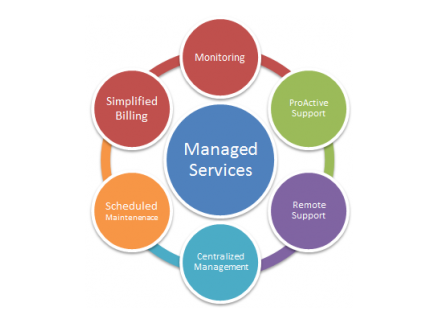 As Managed Service Providers (MSPs) move more into the mainstream, business customers will have to learn to strike a balance between service requests, service levels, and service requirements. There doesn’t have to be a communication breakdown between parties, but there often is when service levels collide with requirements. Most MSPs distinguish themselves from standard hosting companies by providing several avenues for the business customer to submit requests, troubleshoot problems, and resolve outages that affect business continuity.
Most MSPs have Network Operations Centers (NOCs) that monitor and manage outages and alerts on a 24x7x365 basis as part of their overall service level agreement with the customer. Many have Help Desks that are staffed around the clock or during extended business hours. And in the case of maintenance windows, planned outages, and patching, MSPs notify customers in advance. However, emergency patching, unplanned outages, and loss of service are part of any IT-related business.
The MSP Alliance defines managed services in the following way:
“Managed Services is the proactive management of an IT (Information Technology) asset or object, by a third party typically known as a MSP, on behalf of a customer. The operative distinction that sets apart a MSP is the proactive delivery of their service, as compared to reactive IT services, which have been around for decades.”
As stated in the definition, it is the proactive service delivery that often creates problems between MSPs and their customers. Proactive delivery can mean downtime for customers to apply critical patches or to perform required maintenance.
This post uses the following definitions for service requests, service levels, and service requirements:
- Service requests – requests by the customer for some type of service from the MSP.
- Service levels – expected, and agreed to, response times and activities that are part of the paid for service.
- Service requirements – regular maintenance, planned down times, patching, security requirements, regulatory compliance, and confidentiality.
For example, if your service experiences a security breach, the MSP may take your service offline until the situation is resolved. Typically the MSP will notify you of the breach and of the in-progress repair. The MSP has other business customers that can’t be put at risk by your compromised service.
The MSP has a service agreement with every customer and you have to realize that your service is no more or less critical than any other, that is, unless you’re paying for a premium level of service with guaranteed response and delivery. Does this all mean that the MSP can ignore your needs or service requests? Certainly not, but you have to understand that the MSP is your business ally, your business partner, and your business advocate. But, they also work for the good of all their customers.
When comparing MSPs, find out which upstream partnerships they’ve formed. In other words, educate yourself on who’s responsible for assisting your MSP with their infrastructure. Who are their partners? What are their service levels? What is their guaranteed response time from vendors during an outage?
Whether you’re looking for Infrastructure-as-a-Service, Platform-as-a-Service, or Software-as-a-Service, find the right partner for you.
This post was brought to you by IBM for Midsize Business and opinions are my own. To read more on this topic, visit IBM’s Midsize Insider. Dedicated to providing businesses with expertise, solutions and tools that are specific to small and midsized companies, the Midsize Business program provides businesses with the materials and knowledge they need to become engines of a smarter planet.
Embracing BYOD and BYON to Reduce Risks
 By Sarah Lahav, CEO, SysAid Technologies
The “bring your own device” (BYOD) trend has received a lot of attention in business circles, but BYON – “bring your own network” – is another security risk IT teams should be working proactively to address. In fact, BYON is a far graver threat to corporate security than BYOD, and the best way to counter the risks associated with BYON is to fully embrace BYOD.
Company IT professionals and security officers are right to be concerned about the risks of BYOD and BYON: Lax security practices such as failure to use strong passwords can put sensitive company data at risk when it is stored on employee devices. And the use of unsecured BYON connections can leave confidential data exposed when employees transmit messages or log in to company portals.
But trying to address the risks associated with BYOD and BYON by banning the use of personal devices in the workplace will ultimately prove to be a nonstarter. An increasingly mobile workforce is transforming the way business is conducted, and always-on, always-connected mobile devices are driving the change. In fact, industry analyst Gartner predicts that by 2017, half of employers will stop providing devices to employees altogether and require staff to use their personal devices on the job.
The reason many companies are embracing BYOD is that, in theory, it delivers a win-win: Employees win because they get to use the devices they choose that are increasingly an integral part of their daily lives, and employers win because BYOD expands access to employees and increases job satisfaction. But without robust IT support, neither employees nor employers can achieve a clear win. Instead, employees take chances with company data via BYON connections, leaving employers exposed to more liabilities, which transforms a potential win-win into a lose-lose proposition.
BYOD is inevitable. The IT team’s customers – their employer and its employees – are increasingly demanding the flexibility it delivers. So to address the risks, IT needs to embrace BYOD now, while the trend is evolving, and prepare for emerging technologies like wearables, which will affect enterprise security in the future.
IT departments can counter the threat of BYON by providing WiFi access for employee-owned devices, which gives IT professionals greater control over security. IT departments can provide across-the-board support for social platforms and apps, which will give them a chance to review security protocols. In return for enabling IT to gain greater control over device and network security, employees will receive support, creating a win-win scenario.
In a rapidly evolving technology environment, many IT teams are struggling to keep up, looking for ways to protect their companies and provide the services their customers demand. The BYOD and BYON trends pose daunting challenges for IT, and it’s understandable that the first impulse would be to try to keep the risks at bay by banning the use of personal devices on the job. But these trends aren’t a passing fad: BYOD is a sea-change in IT.
Because the use of personal devices in every facet of life is gaining momentum and will be bolstered by emerging technologies, the time is now for IT organizations to embrace and manage the change. As is often the case in business, identifying what the customer demands and shifting strategies to meet their requirements turns out to be a smart move – for the company, for the customer and for those involved in providing support.

 Techopedia
- An error has occurred; the feed is probably down. Try again later.
Datamation
- USA₮ Modernizes American Payments with High-Impact St. Patrick’s Day Activation in Times Square
- Google and NextEra Strike AI-Powered Grid Deal
- NYT Sues Perplexity AI in Copyright Conflict
- Cloudflare Outage Affects Major Websites
- OpenAI Forces AI to Confess Its Lies
- OpenAI Declares Code Red as Google’s Gemini 3 Threatens ChatGPT
- Coupang Breach Exposes 33.7M South Koreans’ Data
- ChatGPT Celebrates Third Anniversary
- Asahi Group Reveals Findings of Cyberattack
- OpenAI Discloses Mixpanel Security Incident Affecting Some API Users

 The Frugal Networker
You must be logged in to post a comment.