Archive
The IBM PowerLinux 7R4 Interview with Chuck Bryan (Podcast)

The IBM PowerLinux 7R4 Server.
Chuck Bryan, Team Leader for Linux on Power Systems, and I discuss Power 7 and Power 7+ Systems, the power behind the famous Watson computer, and the recent Linux on Power Systems announcement from IBM, the IBM PowerLinux 7R4 server.
PowerLinux systems run industry standard Red Hat Enterprise Linux or SUSE Linux Enterprise Server. You can also partition Power Systems using PowerVM virtualization tools to run Linux, AIX, or IBM i applications.
Length: 23:54 minutes. Format: MP3. Rating: G
The embedded player requires Adobe Flash. If you need a different delivery method, please notify me.
This interview focuses on IBM’s announcement about the new PowerLinux System (PowerLinux 7R4) for analytics and cloud computing. The PowerLinux 7R4 server is the same technology behind Watson. The purpose of the PowerLinux 7R4 is to provide businesses with a system that is an energy and cost-efficient computing platform to run your data-centric workloads for analytics, transaction processing, applications, and other compute-intense workloads.
The Power Systems line provides you with a secure, reliable computing and energy efficient virtualization platform.
An interesting addition to IBM’s announcement, that Chuck discusses during the podcast, is that IBM has partnered with EnterpriseDB, the company that develops and supports the open source database, PostgreSQL, to bring you a low-cost, Oracle-compatible solution. EnterpriseDB’s Postgres Plus Advanced Server allows you to seamlessly migrate off of Oracle and onto an equally capable database (RDBMS) for a fraction of Oracle’s cost.
In May 2013 IBM opened the world’s first IBM’s Power Systems Linux Center in Beijing, China and in June 2013 IBM announced its intention to open two more IBM Power Systems Linux Centers in New York and Austin, TX.
This post was written as part of the IBM for Midsize Business program, which provides midsize businesses with the tools, expertise and solutions they need to become engines of a smarter planet.
I’ve been compensated to contribute to this program, but the opinions expressed in this post are my own and don’t necessarily represent IBM’s positions, strategies or opinions.
IBM Flex-es its computing muscle again by going ‘Beyond Blades’
 This week IBM announced exciting news about new offerings within the Flex System. These offerings will help the system fully evolve into a high-performance, reliable, secure and cloud-based system that can be tailored to meet every SMB’s unique IT needs. Users will enjoy integrated computing, storage, networking resources that are both easy to use and adaptable to dynamic external conditions.
IBM’s new Flex systems go beyond blades to bring you truly integrated compute, storage, networking, and management into a modular and flexible system. It’s also the industry’s first 40GB bandwidths and integrated SAN.
What this means for SMBs is flexible, scalable, and customizable systems that can grow with business needs. The new modular Flex System is perfect for SMBs who are budget conscious in that this new Flex System provides more compute power per dollar than any comparable hardware on the market.
And IBM is going beyond blades in another way by designing its systems as ‘compute nodes’ and giving you the capability to support the equivalent of 28 compute nodes per IBM Flex System Enterprise Chassis.
“With a broad range of x86 and IBM POWER compute nodes, the Flex System V7000 storage node, enhanced networking capabilities and sophisticated system management capabilities, you can upgrade your existing blade server infrastructure and make your IT simpler, more flexible, more open, and more efficient.”
To learn more about IBM’s Flex System technology, watch the IBM Flex System video or connect to IBM’s Flex System page describing the technology and the new game changing improvements in detail.
This post was written as part of the IBM for Midsize Business program, which provides midsize businesses with the tools, expertise and solutions they need to become engines of a smarter planet.
I’ve been compensated to contribute to this program, but the opinions expressed in this post are my own and don’t necessarily represent IBM’s positions, strategies or opinions.
Transforming your company with cloud, mobile and MSPs
 I just watched a video where IBM and two IBM partners discuss Managed Service Providers (MSPs), cloud, mobile, and transforming your business with technology. The video is part of a new IBM series targeting SMBs and demonstrating how cloud, mobile, and their MSP partners can transform or launch your business for very little money. They call the series Coffee and Conversation. It’s a casual and relaxed conversation over coffee about technological transformation. The two companies represented in this first video are CloudView and WakaDigital.
The message of the video is clear: MSPs can help transform or launch your business for little money and give you the global exposure and agility required to succeed in today’s market.
It sounds simple and it is simple.
Personally, if I were to launch a new business today, I would not lease office space. I wouldn’t buy or even lease a bunch of hardware for my own server room. I certainly wouldn’t go into massive and crushing debt to acquire the hardware, software, support staff, maintenance contracts, and the myriad of costly services and personnel required to run the business.
I would work out of my home, comfortably in my home office, and use an MSP and cloud technologies to empower me to:
- Appear as a larger company.
- Quickly spin up a usable computing infrastructure.
- Enable my customers to interact with me via mobile and cloud technologies.
- Allow customers to purchase my products and services securely online.
- Be everywhere at once.
Now I know that sounds far-fetched but it isn’t. Finding the right business partners is essential to your success. Your MSP is your business partner. It provides everything you need to run your business from a technology perspective.
All you have to worry about is how to manage your supply chain, contingent workers, and accounting. But guess what? IBM has a solution for all of those problems too. Their partners cover the gamut of every needed service and possible line of support that you need.
As Leila Ashley (CloudView) says in the video, this new agile business model “levels the playing field” for SMBs who need to compete with hungry start-ups, as well as, established, well-funded enterprises. Ms. Ashley goes on to zero in on an important aspect of this new business model by stating that they can launch an e-commerce site in a day’s time instead of a week. What she’s telling you is that you can effectively have an idea at 8AM and realize that dream by 5PM the same day.
You don’t have to wait for proof of concepts, ordering new hardware, procuring software, installing, patching, and updating any operating systems or applications. You have an agile, automated solution waiting for you with very few obstacles and very low entry barriers.
Business is different today than it was even ten years ago. Cloud technologies and agile systems allow us to respond to changing business needs, to test new products and new markets without a heavy capital investment, and without long delays. We can now respond within the windows of opportunity that present themselves to us. That is true agility.
And what about businesses that can’t make the transition?
Denise Garth (IBM) makes an excellent point in the video by observing that businesses either will transform or possibly become irrelevant.
Forty years ago, you weren’t relevant if you didn’t have a Yellow Pages ad. Ten years ago, you weren’t relevant if you didn’t have a website. Today and tomorrow, you might become irrelevant if you can’t meet the challenges of a transformed business. Sure, some might say that business is business and people don’t change but, on the other hand, technology has transformed the customer into a technologically-connected buyer. That’s relevant to any business.
Businesses must transform to meet the needs of the new customer paradigm. Online, agile, cloud-oriented, connected, mobile, and social media-savvy is the new business paradigm.
IBM’s MSP partners can help you transform your business. Level the playing field by contacting IBM and its partners and go have a cup of coffee.
While you’re sipping on that hot cup of bean juice, take a look at how other companies just like yours are being transformed.
This post was written as part of the IBM for Midsize Business program, which provides midsize businesses with the tools, expertise and solutions they need to become engines of a smarter planet.
I’ve been compensated to contribute to this program, but the opinions expressed in this post are my own and don’t necessarily represent IBM’s positions, strategies or opinions.
Leveraging Next-Generation MSPs for Agile Business Strategies
 Managed Service Providers (MSPs) have taken on a whole new role in the IT service and support business—that of the Agile Business Enabler. And this moniker isn’t just another marketing buzzterm, it’s a real thing. Since Chuck Calio has told us What a next-generation MSP looks like and Timothy Tsao has told us not only what a next-generation MSP looks like but also how it acts, I’ve decided to focus on one particular aspect (#4) of Timothy’s described actions—agility.
In my opinion, agility is the most important “action” that an MSP can take to increase its business by enabling its customers to become more responsive to marketing campaigns, to changing business needs, and to the needs of its customer’s customers.
Business agility is the ability of a business to respond to, to act on, and to predict business trends. Whether those trends are driven by new technologies, by the latest fad, or by the season; businesses need to respond quickly and decisively to these changes. The role of the MSP is to enable their customers to do this seamlessly and without intervention.

Become a Next-Generation MSP at Edge 2013
The best strategy for MSPs to enable businesses to become agile is to create customer portals that allow for automated infrastructure management. Many MSPs already have such portals in place but perhaps the missing link is the scalability of the solutions offered to customers.
As Timothy Tsao suggests, one way to offer agile solutions is to invest in next-generation systems and storage that allow customers to “spin up client applications and new services in minutes, not days.”
That single term, “investment” is the most important one in that sentence. As both Tsao and Calio state, cloud services are trending toward commoditization. Investment in next generation technologies requires capital expenditure, which means a lag time between that investment and its financial return. This situation often results in a fiscal Catch 22. You can’t invest until you have the business justification for it and you can’t acquire new business until you’ve made the investment.
I believe that MSPs must take the risk and invest in a “Field of Dreams” approach to acquiring new business and enhancing services for current customers.
The way MSPs become next-generation MSPs is through investment and through this new agility-enabled approach to their customer’s businesses. In other words, for MSPs to realize a next-generation shift, they must focus on their customer’s businesses and their customer’s customers. That, in part, is how I define “next generation.” The MSP must not only invest in new technology but also must focus on that next generation of customers.
See Also:
IBM Offers $4 Billion in SMB Financing
This post was written as part of the IBM for Midsize Business program, which provides midsize businesses with the tools, expertise and solutions they need to become engines of a smarter planet.
I’ve been compensated to contribute to this program, but the opinions expressed in this post are my own and don’t necessarily represent IBM’s positions, strategies or opinions.
IBM’s SmartCloud Entry 3.1 Launch (Podcast)
 Today, IBM launches its new SmartCloud Entry version 3.1 that adds support for Hyper-V to VMware, PowerVM, and KVM that will be available to the public mid-June 2013. The podcast includes IBM Program Director for Cloud Computing Systems and Technology Group, Jeff Borek, Product Line Manager for Virtualization and Cloud Solutions, IBM Systems Software Team, Ian Robinson, and Alan Dickinson, IBM Program Director for Cloud Computing in Mid-sized Businesses.
Length: 32:05 minutes, MP3 format, Rated G for all audiences.
In the podcast, the IBM team and I cover the general features and aspects of SmartCloud Entry. Plus, I ask the team some tough questions about affordability, maintenance, ease of deployment of new resources and more.
Why it’s frugal: IBM’s SmartCloud Entry is frugal because it enables businesses to provision cloud resources with a few simple mouse clicks, it’s inexpensive compared to other cloud solutions, it’s easy for businesses to create a private cloud without having to purchase additional hardware or without having to replace what they already have. SmartCloud Entry is multi-vendor compatible and multi-platform capable.
If you don’t get all of your questions answered from the podcast, you can contact an IBM partner and connect to IBM’s Cloud Computing site for more information. The site provides you with several videos, features lists, links to products and services, and much more including a community site where you can read blogs, watch videos, and participate in cloud forums.
For more information on private cloud click here to download a free ebook on private cloud from the Aberdeen Group.

This post was written as part of the IBM for Midsize Business program, which provides midsize businesses with the tools, expertise and solutions they need to become engines of a smarter planet.
I’ve been compensated to contribute to this program, but the opinions expressed in this post are my own and don’t necessarily represent IBM’s positions, strategies or opinions.
Mid-market Business Cloud Transition Pain Points (Podcast)
IBM’s Vice President of Global Mid-market Sales, Mike McClurg, and I discuss IBM’s role in transitioning mid-sized businesses into virtualized infrastructures and cloud-based technologies. We discuss IaaS, SaaS and pain points associated with the shift to hosted solutions. 21 minutes. MP3 format.
IBM_MidMarket_Cloud_Discussion_with_MikeMcClurg_Apr_2012
This post was written as part of the IBM for Midsize Business program, which provides midsize businesses with the tools, expertise and solutions they need to become engines of a smarter planet.
Linux has a Place in the Enterprise
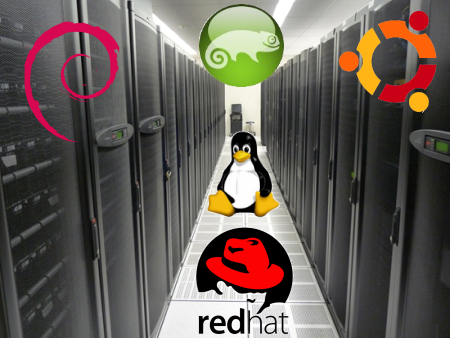
From its meager beginnings as a hobby project to its extreme success among geeks, Linux has survived lawsuits, boycotts and onslaughts from every corner of the UNIX, Windows and Mac computing markets. Linux has, in spite of its critics, made its way into the world’s data centers. Linux enjoyed early success as a host platform for the Apache web server but now has blossomed into a formidable contender for rack space. For an operating system, Linux has the best mixture of vendor neutrality, open source code base, stability, reliability, scalability and affordability. It also provides the user or administrator the choice of graphical user interfaces or none at all.
Linux has one very significant advantage over all other operating systems: Hardware compatibility. It runs on a variety of hardware platforms from wristwatches to mainframes, although it’s most familiar playing field is on x86 metal.
Two decades of community development and support have brought Linux into the mainstream as an enterprise-level operating system that’s competitive on every level of computing. Linux hosts workloads of all sizes and types: Web services, databases, applications, network services, file services, virtualization and cloud computing.
With the notable exceptions of Microsoft’s Hyper-V and Solaris Zones, Linux-based virtualization solutions are the standard in contemporary data centers. And, the world’s largest cloud computing vendor, Amazon, uses Xen virtualization for its services. Though it’s rare outside of Internet Service Provider (ISP) realms, you can run “Zones” virtualization on Linux too. Zones, containers or jails are a popular method of securely compartmentalizing Linux applications from one another. ISPs use containers to separate users from one another on shared systems for shell access. It’s an effective and secure method of leveraging inexpensive hardware over dozens of users.
Though Linux has a dedicated following, corporate buy-in and support from the world’s largest hardware and software vendors, there are still those who aren’t convinced. As late as mid-2011, I found several articles and commentary challenging the viability of Linux as a data center operating system.
The problem with Linux adoption stems from a misunderstanding of the Linux support model. Linux, as a kernel, and generally as an operating system, is free. Free means its code is free to use, change and adapt to any purpose. Some refer to this freedom as open source. Open source does not necessarily mean free. Proprietary software can be open source but it isn’t free to change, rebrand, etc. Linux is free software and it’s also open source.
It also means that Linux is free of charge. Vendors charge for media, consulting, support and a host of associated services but they usually do not charge for the Linux software itself.
The very thing that makes Linux so desirable to geeks and those knowledgeable in the ways of free software is also the aspect that makes some company executives turn away from Linux as a data center operating system. Incorrectly, they assume that since something is free and doesn’t have strings attached that there must be something wrong with it.
Dispelling myths associated with Linux use requires a lot of energy and time. But, there is one sure test for Linux data center viability: IT Services Support.
Linux has support, financial and technical, from the biggest names in the IT industry. Each of these industry giants has its own Linux distribution preference but, whichever distribution you decide to use, you can purchase full support for it. You can purchase 24x7x365 support from a variety of sources, including directly from Linux distribution vendors.
Every major IT services company supports Linux, Windows and commercial UNIX flavors as part of its portfolio. Linux is a mainstream operating system that carries workloads for every sized company in the world. Linux is no longer cute or niche. If you use any online web hosting services, web-based CRM software, databases, virtualization or cloud services, chances are greater than 90% that you’re using Linux behind the scenes for those services.
Linux supports high availability, clustering, high-performance computing and a variety of hardware platforms. It also supports industry standard LDAP (Directory) services, large databases, journaling filesystems, SMP computing and major computer languages including an implementation of Microsoft’s .NET platform.
Linux has its place in your data center doing the enterprise-level heavy lifting at a lower cost than comparable proprietary systems. The days of the monolithic, single operating system data centers are long gone. Heterogeneous networks, including Linux, are today’s standard fare.

This post was written as part of the IBM for Midsize Business program, which provides midsize businesses with the tools, expertise and solutions they need to become engines of a smarter planet.
Why You Need Infrastructure as a Service (IaaS)
Infrastructure as a Service is that part of cloud computing that allows you to lease and manage computing infrastructure for your business needs. Computing infrastructure includes virtual machines (VMs), operating systems, middleware, runtime components, network, storage, data and applications. Cloud computing vendors provide the necessary underlying physical hardware (servers, network, storage) that they own and manage transparently in the background. The two worlds have little crossover. The cloud vendor and customer have a non-intrusive relationship with one another just as you currently do with your web hosting provider. They’re there when you need help but their direct involvement in your business is zero.
The cloud vendor also supplies you with a management interface in which you work with your infrastructure. You’re responsible for license management for your operating systems and software. You pay for compute resources per CPU, per hour, per gigabyte of bandwidth, per gigabyte of storage or a combination.
The Three Faces of IaaS
IaaS isn’t as simple as a single offering but the boundaries between types are well-drawn. First, you have the Private Cloud. Private IaaS is exactly what you think it is—a dedicated, private infrastructure. Think of your own data center setup as a Private Cloud IaaS. Of course, unless you have cloud infrastructure (virtualization, storage, extreme redundancy, etc.), it isn’t officially a cloud but you get the idea.
On the other end of the spectrum is the Public Cloud. A Public Cloud is a 100 percent hosted solution. You own no hardware. It is the Public Cloud that is the focus of this article.
If you combine the two cloud concepts, you have what’s known as a Hybrid Cloud. A Hybrid Cloud can be any percentage mixture of Private and Public infrastructures for your company. Most companies will evolve into this type of cloud from a traditional, private hardware infrastructure to a cloud-based one.
A Hybrid Cloud is the solution that cloud vendors recommend to their customers who’ve grown their own data centers and that are comfortable with that model. Mix your Private Cloud with the Public Cloud for a solid and complete solution for you and your customers. A Hybrid Cloud mixes the security and control of a traditional data center with hosted cloud infrastructure. Typically, companies will transition their disaster recovery efforts to the Public Cloud while retaining production operations in-house in a Private Cloud.
Industry experts view Hybrid Clouds as a transitional step to a full Private Cloud. They see this process as a stepwise migration. As leases and service contracts expire, companies will move their computing workloads from private data center architecture and Private Clouds to virtualized architecture in the Public Cloud.
Analysts predict that by the end of 2012, as many as 20% of businesses will exist completely in the Public Cloud.
Cost Savings But Not Where You Think
Cost tops the advantages of IaaS cloud computing. To purchase the same amount of physical computing power, to manage that computing power and to house that computing power costs many times more than bulk pricing from a cloud vendor. IaaS is basically hardware outsourcing. You don’t own the hardware. You don’t manage the hardware. You use the hardware but its care and feeding are not your problem.
Put whatever moniker on cloud computing’s IaaS that you want but it’s really no different than what you probably do now in your current data center. Unless you own your data center, pay its staff, maintain the facility and physically service your own hardware, then you’re already using hardware (infrastructure) as a service. The primary difference in a standard data center space lease and IaaS is that you don’t have to deal with any hardware.
IaaS frees you from purchasing or leasing hardware, having it shipped to the data center, paying someone to deploy it into a rack, paying for that rack space, managing the hardware throughout its life cycle and taking care of its disposal. That’s why traditional data center infrastructure management is expensive. You have to pay for the hardware, you have to pay for maintenance, you have to pay for management and you have to pay for the business services that required all of this expense in the first place.
On the other side of the argument, cloud opponents state that your TCO is no lower with IaaS than with traditional data center service. This might be true from a pure hardware point-of-view. After all, the IaaS vendor has to pay for the data center infrastructure and pass his costs on to you. However, the savings is in the form of labor costs.
Count the number of full-time employees (FTEs) you have on hand right now to manage your infrastructure. Now, count the number of FTEs you’ll require by not managing any hardware. Is there a significant difference between the two numbers? Add up the total cost of those FTEs who you won’t need anymore and multiply that number by three years (standard hardware lease length). That number is your savings.
Since your new virtual infrastructure comes with online management tools for creating new servers, installing operating systems, presenting storage and configuring network, you’ll need fewer FTEs to handle the job.
Lower Entry Barriers and Rapid Innovation
IaaS also lowers the financial and logistical barriers for startup businesses to enter the market and push their products and services to customers in a fraction of the standard timeframe. The IaaS model allows startups to start small and grow to any size on the pay-as-you-go plan. There’s not a huge outlay of capital on hardware and FTEs that traditionally built businesses have experienced.
Another advantage of IaaS is rapid innovation. For example, if you have an idea for a new service today, you could spin up a virtual test infrastructure for a few hundred dollars, test your service, demo your service and deploy a working business model in a matter of days instead of months. In a time when windows of opportunity are often very small, IaaS makes sense for who need a quick service build-out to show investors or potential customers.
Embrace the Elastic and Mobile Cloud
IaaS also makes your company mobile, elastic and global. You can manage your systems from anywhere, you can shrink and grow your computing infrastructure as needed and you can keep your global customers happy with zero downtime. And, since you’re not tied to a server room or data center, your office location is irrelevant. You can work from home and your employees can be spread across the globe.
Have you ever had to move systems, network and storage from one location to another? If you have, you know about expense, outage and failure. Most cloud vendors maintain geographically disparate data center locations to ensure zero downtime for your infrastructure. Sure, there’s an additional cost for the service but how much is your current disaster recovery solution costing you?
Summary
You need IaaS because you need mobility, agility, stability, availability, elasticity and frugality in your business. You can save money. You can beat the competition to market. And, you can do it with the peace of mind that someone else is minding the hardware foundation under your business.
Where to Go from Here
If you’re considering moving to an IaaS solution or you’re part of a startup, contact a cloud vendor and discuss your needs. Remember that not all cloud vendors can or will give you good advice. Look for experience, longevity, availability, customer service and customer satisfaction in your quest to migrate to the cloud. Remember that your partnership with a cloud vendor is an important one. It’s more than a simple landlord-tenant relationship; it’s a cohabitation. You’re domestic partners and you have to select wisely. So, you need to find a partner who can help you make a smooth transition to your desired level of cloud adoption, since you’re going to be there a very long time.
This post was written as part of the IBM for Midsize Business program, which provides midsize businesses with the tools, expertise and solutions they need to become engines of a smarter planet.

 Techopedia
- An error has occurred; the feed is probably down. Try again later.
Datamation
- USA₮ Modernizes American Payments with High-Impact St. Patrick’s Day Activation in Times Square
- Google and NextEra Strike AI-Powered Grid Deal
- NYT Sues Perplexity AI in Copyright Conflict
- Cloudflare Outage Affects Major Websites
- OpenAI Forces AI to Confess Its Lies
- OpenAI Declares Code Red as Google’s Gemini 3 Threatens ChatGPT
- Coupang Breach Exposes 33.7M South Koreans’ Data
- ChatGPT Celebrates Third Anniversary
- Asahi Group Reveals Findings of Cyberattack
- OpenAI Discloses Mixpanel Security Incident Affecting Some API Users

 The Frugal Networker
You must be logged in to post a comment.